

A single clinical trial can touch a dozen or more systems before a single dataset is ready for analysis. EDC captures case report forms. CTMS tracks site performance and monitoring visits. eCOA and ePRO tools collect patient-reported outcomes. An imaging platform manages DICOM uploads and central review. Central and local laboratories return results on their own schedules and in their own formats. EHRs, wearables, and IRT/RTSM systems each add another data stream. When these systems do not connect well, the work of making trial data usable does not disappear. It moves onto the data management and biostatistics teams, who end up reconciling spreadsheets, chasing missing records, and manually matching patient IDs across platforms that were never designed to talk to each other.
That is the practical reason a clinical trial data ecosystem matters. It is not an abstract IT concept. It is the difference between a trial that generates clean, analysis-ready data as a byproduct of its normal operations, and one that spends weeks at database lock reconstructing a dataset that should have already existed.
What Is a Clinical Trial Data Ecosystem?
A clinical trial data ecosystem is the full set of systems, data sources, and integrations that generate, move, store, and analyze data across a clinical trial, along with the standards and governance that keep that data consistent as it passes between them. It includes the core trial management systems, the participant and site-facing tools, specialized data sources such as laboratories and imaging, the integration layer that connects them, and the analytics tools that turn accumulated data into evidence.
The definition matters less than the question it sets up: how does data move from the point of collection to the point of analysis without creating additional manual work, duplicate entry, or datasets that quietly drift out of sync with each other? Most of what follows is an answer to that one question, worked through system by system.
What Makes Up a Clinical Trial Data Ecosystem?
No single system defines a clinical trial data ecosystem. It is made up of several categories of tools, each responsible for a different slice of the trial, that need to work as one connected environment rather than as isolated applications. The table below summarizes the main building blocks, and the sections after it explain each one.
| Layer | Typical systems | Data they generate | What it must reconcile with |
| Core trial management | EDC, CTMS, eTMF | CRF data, site and monitoring records, regulatory documents | Each other, plus every external data source |
| Participant and site-facing | eCOA, ePRO, eConsent, IRT/RTSM, wearables, EHR extracts | Outcomes, consent records, randomization and supply data, sensor streams | Participant, visit, and site identifiers in the EDC |
| Specialized data | Central and local labs, biomarker vendors, imaging platform | Lab results, biomarker data, DICOM images, measurements, and reads | Patient and visit records in the EDC and CTMS |
| Integration layer | APIs, middleware, data pipelines | Transfers, mappings, validation logs | Shared standards and identifiers |
| Analytics | Statistical environments, safety monitoring, data warehouses | Analysis datasets and submission packages | Standardized, validated source data |
1. Core Clinical Trial Management Systems
The Electronic Data Capture (EDC) system is usually the backbone, collecting case report form data directly from sites. The Clinical Trial Management System (CTMS) tracks site activation, monitoring visits, enrollment, and operational milestones. The electronic Trial Master File (eTMF) stores the regulatory and administrative documents that prove the trial was run according to protocol. These three systems overlap constantly. Monitoring visit dates recorded in the CTMS should line up with query resolution recorded in the EDC, and both should be reflected in the documentation held in the eTMF.
2. Participant and Site Data Sources
Electronic clinical outcome assessments (eCOA) and electronic patient-reported outcomes (ePRO) capture data directly from participants, often outside a clinic visit entirely. eConsent systems manage informed consent, ideally with a record that ties back to the same participant identifier used everywhere else. IRT/RTSM systems handle randomization and drug supply, and their allocation records have to match what the EDC shows for each participant. Wearables and other digital health technologies add continuous sensor data, while EHR extracts bring in routine care data that was never collected for the trial. Each of these sources adds real value, and each one adds another point where identifiers, timestamps, or visit windows can drift out of alignment with the rest of the trial.
3. Laboratory, Imaging, and Other Specialized Data
Central and local laboratories return structured results on their own transmission schedules. Genomic and biomarker data often arrives through a separate specialized vendor. Medical imaging data follows its own path entirely: DICOM files move from scanner to imaging platform to central reader, generating both the images themselves and a growing set of derived data, including measurements, annotations, and reads. All of it has to connect back to the same patient and visit record as everything else. These specialized data types are often the least standardized part of the ecosystem, because each modality and each vendor has historically built its own format and workflow.
4. Integration and Interoperability Layer
This is the layer that actually connects everything above it: APIs, middleware, and data pipelines that move information between systems automatically rather than through manual export and re-entry. A mature integration layer relies on shared standards instead of a custom, one-off connection between every pair of systems. CDISC ODM describes how clinical trial data and metadata are exchanged between systems. HL7 FHIR is the main standard for pulling clinical data out of health records. DICOM governs how medical images and their metadata are stored and transferred. Without this layer, every new system added to a trial multiplies the number of manual reconciliation points rather than reducing them.
5. Data Standards, Governance, and Security
Standards define how data should look long before a submission is due. CDASH sets out how to collect data consistently on case report forms, while SDTM defines how that data is organized for regulatory submission. The two only work together if every system feeding the ecosystem is built or configured to produce data in a compatible shape from the start. Governance covers who owns which data, who can access it, and how changes are tracked. Security and compliance sit underneath all of it: GxP validation, 21 CFR Part 11 audit trails, GDPR and other data protection requirements. A connected ecosystem multiplies the number of places sensitive data can move through, not just the number of places it can be created. Current good clinical practice guidance, ICH E6(R3), also puts more weight on fit-for-purpose, risk-proportionate data governance across the systems a sponsor uses.
6. Analytics and Downstream Data Use
Once data has been collected, integrated, and standardized, it feeds into statistical analysis, safety monitoring, and eventually the submission datasets a regulator reviews. Increasingly, it also feeds AI and machine learning models, cross-trial analytics platforms, and real-world evidence programs that depend on the same underlying data being reusable well beyond the study it was originally collected for.
How Data Moves Through the Clinical Trial Ecosystem
At a practical level, data in a well-connected ecosystem moves through a consistent sequence, regardless of which system it originates in:
- Collection: Data is captured at its source: a site entering a case report form, a participant completing an ePRO questionnaire, a scanner generating a DICOM image, a lab instrument producing a result.
- Transfer and integration: The data moves from its source system into the broader ecosystem through an API, a standardized file transfer, or a middleware integration, rather than a manual export.
- Validation and reconciliation: Incoming data is checked against expected formats, ranges, and identifiers, and cross-checked against related data from other systems to catch mismatches early.
- Centralized storage: Validated data lands in a system of record, whether that is the EDC database, a clinical data warehouse, or a specialized repository for imaging and other high-volume data types.
- Standardization for analysis: Data is mapped to the standards required for statistical analysis and eventual submission, such as SDTM and ADaM.
- Analysis and reporting: Biostatistics, medical monitoring, and safety teams work from the standardized dataset to generate the analyses, reports, and submission packages the trial exists to produce.
Each step depends on the one before it being done correctly. A break early in that chain, such as an identifier that does not match or a metadata field left blank, tends to surface much later, usually at database lock or during a regulatory review, when it is far more expensive to fix.
Why Clinical Trial Data Becomes Fragmented
Fragmentation is rarely a single failure. It is usually the accumulated result of reasonable decisions made in isolation. A study team selects the best available eCOA vendor for a given indication. A separate team, sometimes at a different point in the trial's timeline, selects an imaging platform based on its own evaluation criteria. Each choice makes sense on its own, but nobody was responsible for making sure the resulting systems could actually exchange data with each other.
The problem compounds across a trial's lifecycle. Sites use their own local systems before data ever reaches a sponsor's EDC. Vendors are swapped mid-study for cost or performance reasons, leaving historical data in one format and new data in another. Identifiers that should be consistent, such as patient ID, visit number, and site ID, get entered slightly differently by different systems or different people, and what should be a simple join between two datasets becomes a manual matching exercise.
The result is familiar to anyone who has worked through a database lock: data that technically exists but cannot be used without days or weeks of manual cleanup first. That cleanup cost does not show up on a vendor selection spreadsheet, but it is one of the largest hidden costs in a trial with a fragmented data ecosystem.

Integration Is Not the Same as Interoperability
These two terms get used interchangeably, but the distinction between them is one of the more useful ideas in this space. Integration means two systems have been connected, usually through a custom point-to-point link built to move a specific set of data between them. It solves the immediate problem, but it is brittle. Add a third system, and the number of custom connections needed grows fast. Change one system's data format, and every connection built around it needs to be rebuilt.
Interoperability means systems can exchange and use data consistently because they share a common standard, a common data model, or a common set of identifiers, rather than because someone built a custom bridge between exactly those two systems. An interoperable ecosystem does not need a new custom integration every time a new vendor or data source is added, because the new system just needs to speak the same standard the rest of the ecosystem already uses.
Most trial data ecosystems today sit somewhere in between: partially integrated through point-to-point connections, with pockets of genuine interoperability where standards such as CDISC, HL7 FHIR, or DICOM are consistently applied. Moving further toward interoperability is what actually reduces the ongoing maintenance burden of a growing ecosystem, rather than just addressing today's integration problem.
Where Medical Imaging Fits Into the Clinical Trial Data Ecosystem
Medical imaging is often treated as its own separate world in clinical trial data conversations, a specialized workflow running in parallel to the rest of the ecosystem rather than a full participant in it. That separation causes real problems. Imaging data, meaning DICOM files, derived measurements, and reader assessments, needs to connect back to the same patient and visit identifiers used in the EDC and CTMS. It needs to move through the same governance and audit trail requirements as every other data source, and it needs to be as reusable for future analysis as any other structured dataset. For a deeper look at how imaging supports endpoints and workflows, see our guide to medical imaging in clinical trials.
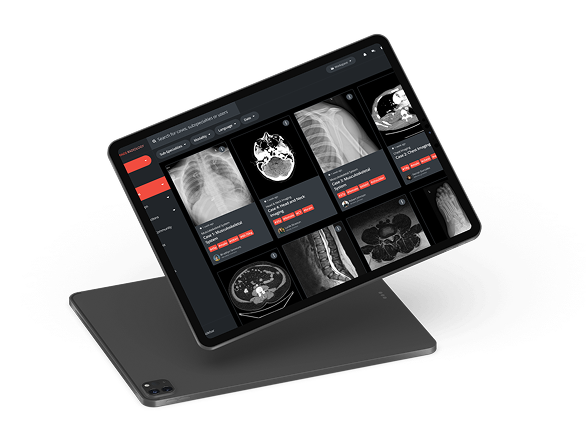
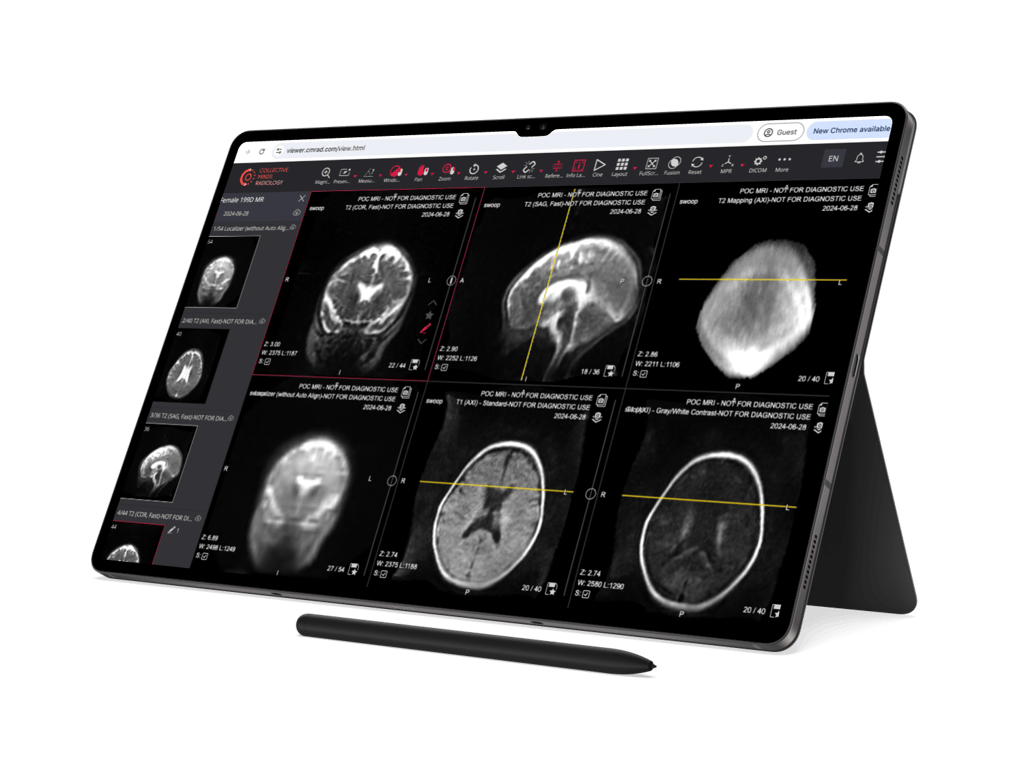
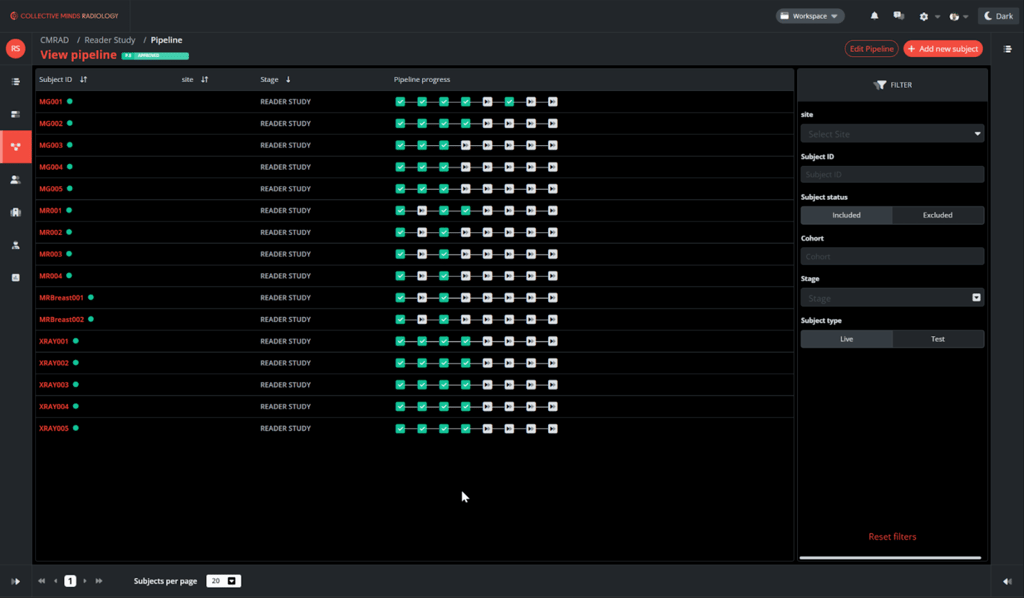
A platform built specifically to centralize medical imaging data gives imaging a genuine place inside the broader ecosystem instead of leaving it as a disconnected archive of files. That means standardized intake and de-identification at the point images arrive, a connected audit trail spanning acquisition through central review, and export processes that keep imaging identifiers aligned with the rest of the trial's data. At Collective Minds, this starts at the site: the Connect gateway links directly to a hospital's PACS or modality and de-identifies and pseudonymizes images at source, so they arrive in the platform already aligned with the study's identifiers. It also means the imaging component of a trial can follow a defined medical imaging strategy rather than being run as a one-off exception to how the rest of the ecosystem operates.
Imaging data integrity depends on the same governance discipline the rest of the ecosystem needs: documented acquisition standards, an audit trail that can withstand a regulatory inspection, and clear clinical trial imaging compliance practices. Trials that treat imaging as fully connected to the rest of their data ecosystem get a meaningful advantage: imaging data that can be reused, cross-referenced with clinical and laboratory data, and evaluated for a secondary use case, rather than data that has to be reconstructed from a vendor's archive months or years after the fact.
Building a More Connected Clinical Trial Data Environment
A clinical trial data ecosystem is not something a team assembles once and leaves alone. Systems get added, vendors change, and standards evolve over a trial's multi-year timeline, and the ecosystem needs to be maintained deliberately rather than left to accumulate whatever connections were expedient at the time. The teams that manage this well tend to share a few habits:
- They choose systems that support standards-based integration rather than proprietary formats.
- They define shared identifiers and governance rules before data collection starts, rather than after a mismatch is discovered.
- They treat every new data source, including imaging, as a full participant in the ecosystem rather than a system that gets connected later if there is time.
That last point matters more than it might first appear. Data that is properly connected within its ecosystem does not just serve the trial it was collected for. It becomes possible to reuse clinical trial data for a secondary analysis, a new indication, or a future study, instead of leaving it locked inside a system that was never designed to be queried again. Building that connected environment takes more planning up front than letting each system operate independently. It also removes most of the hidden cost that fragmented data quietly adds to every trial that has to live with it.

Frequently Asked Questions
What is a clinical trial data ecosystem?
It is the full set of systems, data sources, integrations, standards, and governance that generate, move, store, and analyze data across a clinical trial. It typically spans EDC, CTMS, eTMF, eCOA and ePRO, laboratories, imaging, and the analytics environment that sits on top of them.
What is the difference between integration and interoperability in clinical trials?
Integration connects two specific systems through a custom link. Interoperability means systems can exchange and use data because they share common standards, data models, and identifiers, so a new system can be added without building a new custom connection.
Which standards matter most for clinical trial data?
CDASH and SDTM structure data for collection and submission, CDISC ODM supports data exchange between trial systems, HL7 FHIR connects to health record data, and DICOM governs medical images. Which ones apply depends on the data source and the stage of the trial.
Why does medical imaging data need to be part of the ecosystem?
Images, measurements, and reader assessments have to match the same patient and visit records as the rest of the trial, follow the same audit and governance rules, and remain reusable after the study ends. Treating imaging as a separate silo pushes reconciliation work to the end of the trial.
How can sponsors reduce data fragmentation?
Choose systems that support standards-based integration, agree on shared identifiers and governance before data collection starts, validate data as it moves between systems rather than at database lock, and bring every data source, including imaging, into the same ecosystem from the beginning.
Reviewed by: Pilar Flores Gastellu on October 7, 2026
.png?width=1024&height=1024&name=Edit%20Pipeline-Galaxy%20Tab%20S8%20Ultra%20(2).png)