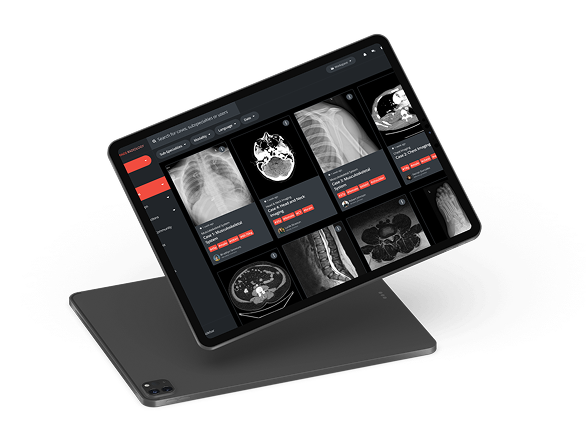

Ask a research team where their medical imaging data actually lives, and the honest answer is often "spread across a PACS, a few hard drives, and whatever the last collaborator sent over." Public datasets get most of the attention in conversations about medical imaging data, but most research and clinical trial teams spend far more time working with their own institution's or trial's imaging data, extracting it, cleaning it, and getting it ready for analysis or AI development.
That gap between "we have imaging data" and "we have usable imaging data" is where most of the real effort sits, and it is largely invisible from the outside. Two institutions can have imaging archives of similar size and still be years apart in how quickly they can turn that data into a working dataset, purely based on how well the underlying extraction, de-identification, and structuring pipeline works.
What medical imaging data includes
Medical imaging data is more than the pixels that make up a scan. A single study typically includes the image data itself, technical metadata describing how and when it was acquired, and increasingly, structured annotations or measurements layered on top by a reader or an AI tool. Understanding all three layers matters, because most of the real work in using medical imaging data happens in the metadata and annotation layers, not the raw pixels.
A CT study, for example, is not one image but a series of slices, each with its own position and orientation metadata that lets software reconstruct the full three-dimensional volume. An MRI study may include multiple sequences of the same anatomy, each capturing different tissue contrast. Treating "medical imaging data" as a single homogenous thing tends to cause problems once a project reaches the point of needing to filter, compare, or combine studies across patients or sites.
Also Read: Medical Imaging Research: Breakthroughs in AI and Advanced Technologies
DICOM is the core standard for medical imaging data
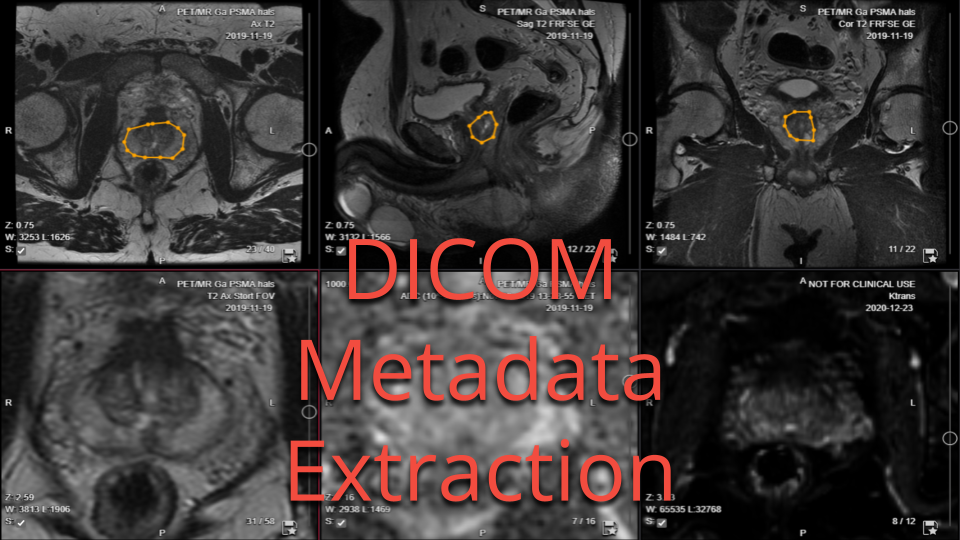
Digital Imaging and Communications in Medicine, or DICOM, is the format nearly all medical imaging data is captured and exchanged in. A DICOM file bundles the image itself together with header metadata: patient and study identifiers, scanner and sequence details, acquisition date, and dozens of other fields, all in one package. That bundling is what makes DICOM powerful and also what makes it a compliance-sensitive format, since patient-identifying information travels inside the same file as the clinical image.
DICOM also defines how imaging equipment and software communicate, not just how files are structured. Network protocols for querying, retrieving, and storing studies are part of the same standard, which is why a scanner from one manufacturer can send a study directly to a PACS or research platform from a different vendor without a custom integration.
For a deeper look at how metadata extraction from DICOM files works in practice, see our dedicated guide on DICOM metadata extraction. This article focuses on medical imaging data as the broader topic, with DICOM extraction as one part of that picture.
It is worth noting that not every medical imaging use case is DICOM end to end. Some research workflows convert early to other formats for compatibility with existing tools, but even then, the original DICOM metadata is usually what determines whether a study is usable for a given research question in the first place, which is why it is worth extracting and preserving even when the pixel data itself gets converted.
How medical imaging data extraction works
Turning raw imaging data into something usable for research, AI development, or clinical review generally follows the same sequence of steps, regardless of the specific tools involved. Skipping or rushing any one of these steps tends to surface as a problem later, usually at the point when someone tries to actually use the data and finds it incomplete, inconsistently labeled, or still carrying identifying information that should have been removed earlier.
1. Identify the imaging source and research question
Before extracting anything, teams need to know which imaging source, a PACS, a trial's central repository, or a public dataset, actually contains data relevant to the research question, and what fields or annotations that question requires. Extracting broadly and figuring out relevance later wastes time and increases the compliance surface unnecessarily.
This step also determines which downstream steps actually matter. A retrospective study pulling from an institutional PACS has very different access and governance considerations than a prospective trial where imaging is captured specifically for the study, even though both eventually go through the same extraction pipeline.
2. Select the right studies, series, and images
A single patient's imaging record can include multiple studies, and each study multiple series and hundreds of images. Filtering down to the specific studies and series relevant to the research question, rather than extracting everything associated with a patient, keeps the resulting dataset manageable and reduces unnecessary data exposure.
Selection criteria should be defined and documented before extraction begins, not applied loosely afterward. A clear, written rule for which series qualify makes the resulting dataset reproducible and defensible if anyone later asks how the cohort was assembled.
3. Extract DICOM metadata from image headers
Header metadata, modality, acquisition parameters, series description, and more, needs to be extracted in a structured, queryable form rather than left locked inside individual files. This is the step that turns a folder of DICOM files into a dataset that can actually be filtered and analyzed.
Different scanner vendors populate some DICOM fields inconsistently, so metadata extraction at scale usually needs normalization logic on top of a simple field read, mapping vendor-specific variants of the same concept to a single consistent value.
4. Extract or convert pixel data
Depending on the downstream tool, pixel data may need to stay in DICOM format or be converted to another format such as NIfTI or PNG for a specific analysis pipeline. Conversion is convenient but is also a common point where metadata gets silently dropped, so keeping an unmodified DICOM original alongside any converted copy is good practice.
Some analysis and AI pipelines expect a specific pixel data representation, such as normalized intensity values or a particular bit depth, and getting this conversion wrong can subtly change how images look to a downstream model without producing an obvious error.
5. De-identify or pseudonymize the data
Before imaging data leaves a clinical or trial environment for research use, identifying information in both headers and, where relevant, pixel data needs to be removed or pseudonymized. This step should happen consistently and automatically rather than depending on a person remembering every field that needs to change.
Pixel-level de-identification matters as much as header cleanup for some modalities. Burned-in annotations on ultrasound images, or facial features on head CT and MRI, can carry identifying information that header-only de-identification will miss entirely.
Also Read: DICOM Anonymizer: Safeguarding Patient Privacy in Medical Imaging
6. Validate data quality and completeness
Extracted data needs to be checked for missing series, corrupted files, or inconsistent metadata before it is used for analysis. Skipping this step means quality issues surface downstream, often after significant analysis work has already been built on flawed data.
Automated validation checks, confirming expected series counts, image dimensions, and metadata completeness, catch most extraction problems immediately. Manual spot-checking alone tends to miss issues that only appear in a small fraction of a large dataset.
7. Structure the data for research, AI, or clinical review
The final step organizes extracted, validated, de-identified data into a structure the intended use case actually needs, whether that is a flat dataset for a machine learning pipeline, a structured research database, or a queue ready for clinical review. Data that is technically extracted but not structured for its intended use still requires significant additional work before it is genuinely usable.
This is also the point where linking imaging data back to relevant clinical or trial data, outcomes, labels, or annotations, needs to happen, since imaging data in isolation is far less useful than imaging data connected to the clinical context it was collected in.
How medical imaging data is prepared for AI and clinical research
AI and research use cases add requirements on top of basic extraction. Machine learning pipelines typically need consistent formatting, balanced representation across patient populations, and clear documentation of how the data was labeled or annotated, since inconsistent labeling is one of the most common reasons a promising model underperforms once deployed. Clinical research use, including regulatory submissions, additionally requires that the data lineage, exactly where it came from and what was done to it, be documented and defensible.
Splitting data into training, validation, and test sets also needs to happen at the patient level, not the image level, since images from the same patient are correlated with each other. A split that puts different scans of the same patient into both training and test sets will produce misleadingly optimistic performance results.
For clinical trial use specifically, the same imaging data often needs to satisfy two audiences at once: a data science team building or validating a model, and a regulatory team that needs to trace every data point back to a specific patient visit and acquisition. Preparing data with both audiences in mind from the start avoids having to redo the work later for whichever audience was not originally considered.
Also Read: Medical Imaging Workflow: Optimize Clinical Trial Success
Medical imaging data security, privacy, and compliance
Medical imaging data carries patient information whether it originates from a hospital, a research consortium, or a clinical trial, and that means security and privacy controls apply regardless of the use case. Access controls, encryption in transit and at rest, and audit logging of who accessed or exported which data are baseline expectations. Regulatory frameworks like GDPR and HIPAA apply directly, and de-identification quality is what determines how the resulting data can legally be shared, stored, and reused.
Compliance obligations follow the data, not the original source system. Once imaging data is extracted from a hospital PACS into a research environment, that research environment inherits the same privacy obligations the original clinical system had, and in a multi-institution or multi-country project, potentially several additional ones on top, since each participating institution and country may add its own requirements.
Read Also: Data Protection & Security
Public medical imaging datasets vs research-ready imaging data
Public repositories such as TCIA or OpenNeuro are valuable for benchmarking and methods development, but they are typically already curated, de-identified, and structured for a specific purpose. Most research and clinical trial teams are instead working with their own institution's or study's raw imaging data, which has not gone through that curation process yet. Treating institutional or trial data as if it were already research-ready, without extraction, validation, and de-identification, is one of the more common mistakes teams make when starting a new imaging-based research project.
Public datasets are also, by definition, historical: they reflect the scanners, protocols, and patient populations available at the time they were assembled. A model or method validated only against a public dataset still needs to be checked against an institution's own current imaging data before being trusted in that specific setting.
Managing medical imaging data with Collective Minds Research
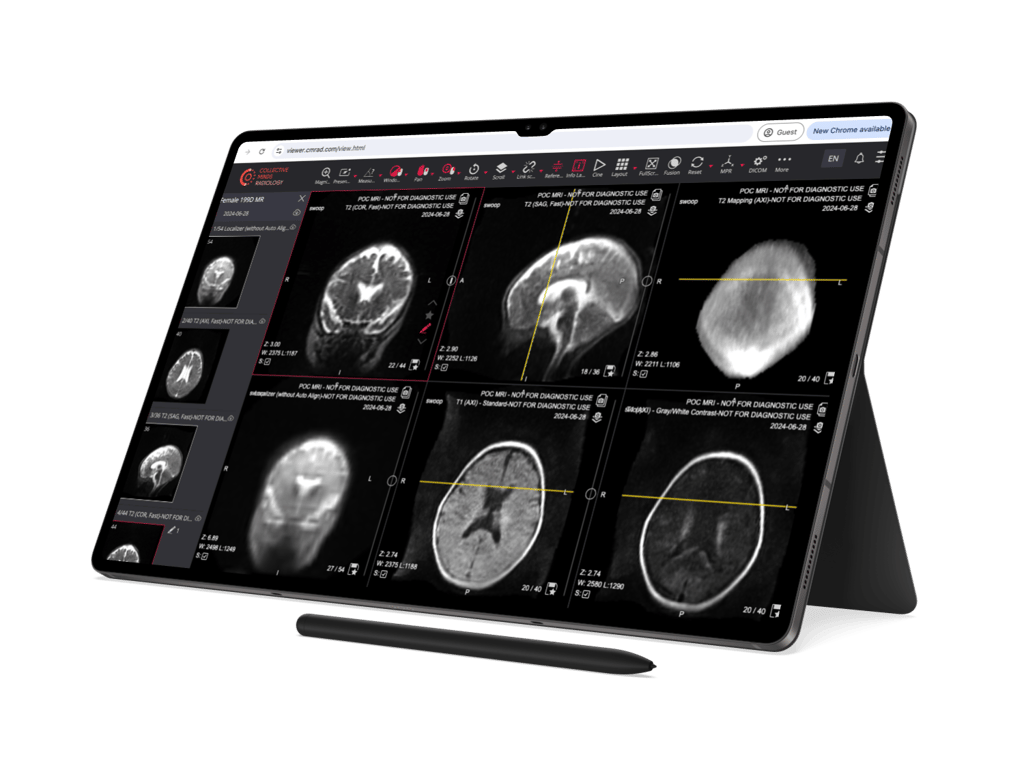
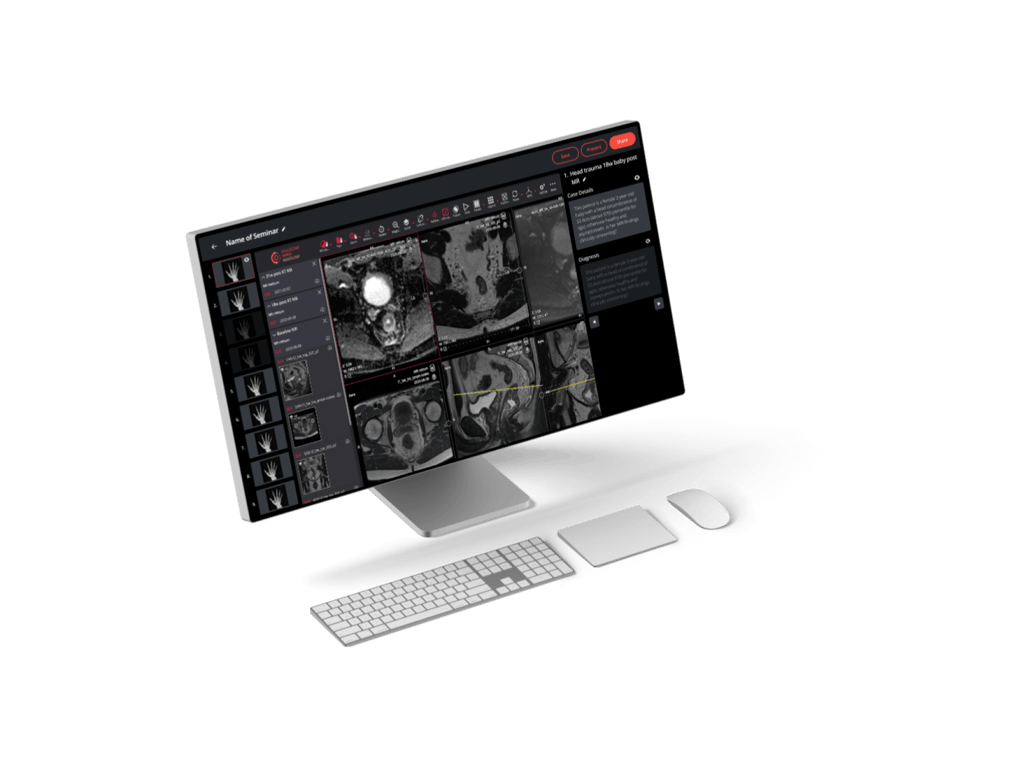
The Collective Minds Research platform supports the full extraction workflow described above: structured metadata extraction, configurable de-identification, quality validation, and organized storage that keeps imaging data ready for research, AI development, or clinical review rather than locked away in an unstructured archive. Because these steps run consistently through the platform, teams spend less time on manual extraction and more time on the analysis the data was extracted for in the first place.
For teams running multi-site studies or consortium research, having one platform handle extraction and de-identification consistently across every contributing site also removes a common source of downstream inconsistency, since each site no longer needs to implement its own version of the same pipeline with its own subtle differences. That consistency compounds over time: the more studies that pass through the same pipeline, the more confidence a team can have that any differences they see in the data reflect real clinical variation rather than an artifact of how the data was handled.
Also Read: Clinical Trial Imaging in Medical Research

FAQs
Is DICOM the same as medical imaging data?
Not exactly. DICOM is the format most medical imaging data is stored and exchanged in, but "medical imaging data" also includes the metadata, annotations, and derived measurements built on top of the underlying DICOM files, not just the raw format itself. Some medical imaging data also exists in non-DICOM formats, particularly in research contexts where images have already been converted for a specific tool.
What data can be extracted from a DICOM file?
A DICOM file contains the pixel data for the image itself along with header metadata such as patient and study identifiers, modality, acquisition date, scanner settings, and series description, all of which can be extracted separately for analysis, cataloging, or de-identification. Some studies also carry structured measurements or annotations stored as separate DICOM objects rather than in the header itself.
Why is de-identification important before using medical imaging data?
De-identification removes or masks information that could identify a patient, which is required before imaging data can be shared outside its original clinical or trial context for research, AI development, or analysis under regulations such as GDPR and HIPAA. Without it, data cannot legally leave the environment it was collected in, regardless of how valuable it might be for research.
Reviewed by: Pilar Flores Gastellu on July 29, 2026