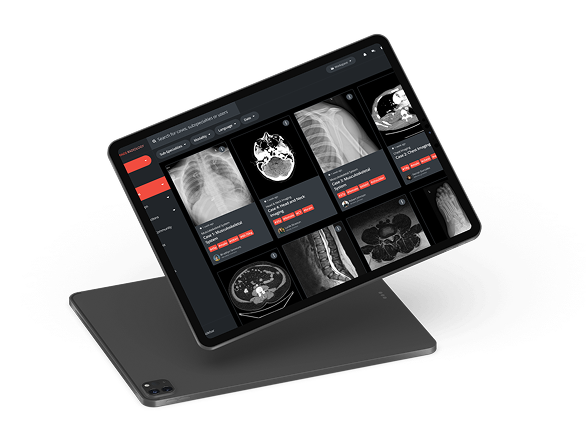
By the time a multi-site trial has enrolled patients at ten or twenty locations, imaging data is usually arriving through as many slightly different processes as there are sites. One site emails studies, another uploads to a shared drive, a third has its own PACS export routine, and somewhere in the middle a coordinator is trying to keep track of which patient's scan is where. Centralizing that data is less about picking one storage location and more about giving every site the same controlled workflow from the moment a scan is acquired.
This problem tends to get worse, not better, as a trial scales. A five-site pilot phase might survive on manual coordination and goodwill. The same approach applied across thirty sites in eight countries usually collapses under its own weight, right around the time the trial can least afford the disruption.
Centralized imaging data management gives trial teams one controlled workflow
Centralizing medical imaging data means replacing a patchwork of site-specific processes with a single, consistent workflow that every site follows: the same upload channel, the same de-identification rules, the same quality checks, and the same review process, regardless of where a patient was scanned. The value is not just tidiness. It is that a trial team can trust the resulting dataset is comparable across sites, because every site's data went through the same controlled steps to get there.
This is a different problem from choosing a storage system. A trial can have all its imaging data sitting in one database and still be effectively decentralized if each site got there through a different, unmonitored process. Centralization has to happen at the workflow level, not just the storage level, to actually deliver consistency.
It is worth being explicit about what "consistency" buys a trial team here. It is not just tidier data management. It is the difference between an imaging endpoint that reviewers and regulators can trust as comparable across every site, and one where any observed difference between sites has to be explained away as a possible artifact of inconsistent handling before it can be treated as a real finding.
How to centralize medical imaging data across multi-site clinical trials
The following steps cover what centralizing imaging data actually involves in practice, from first site activation through final analysis.
1. Set imaging protocol requirements before site activation
Centralization starts before the first patient is scanned, with a written acquisition protocol every site is qualified against. Sites that begin scanning before this is finalized tend to generate data that has to be excluded or specially handled later, which undermines the consistency centralization is meant to provide.
Protocol requirements should be specific enough to be checkable, not just descriptive. "Use appropriate contrast timing" is not enforceable; a defined timing window that a quality check can verify against is.
Building this qualification step into the trial's activation checklist, rather than treating it as a courtesy the imaging vendor handles separately, keeps it from being skipped when a site is under pressure to start enrolling quickly.
2. Give every site one secure upload process
Every site should have exactly one way to get imaging data into the trial, rather than a choice between email, a portal, or physical media depending on convenience. A single upload channel is also the single place a study team needs to monitor to know whether a site's data is flowing correctly.
Simplicity matters here as much as security. A secure process that is complicated to use will get worked around at the first site with a slow internet connection or an unfamiliar IT team, which quietly reintroduces the inconsistency centralization was meant to prevent.
Direct integration with a site's existing PACS or modality, so a study pushes automatically rather than requiring a manual export and upload, removes one more opportunity for a busy technician to skip a step or upload the wrong study.
3. De-identify and pseudonymize imaging data at intake
De-identification should happen automatically as data enters the centralized system, not as a manual step performed differently by whoever happens to be handling a given upload. Consistent, automated pseudonymization at intake is what keeps the resulting dataset both compliant and usable for cross-site analysis.
Centralizing this step also makes it auditable in a way that distributed, site-level de-identification rarely is. One system applying one set of rules is far easier to verify than twenty sites each doing their own version of the same task.
For multi-country trials, this is also where different national or regional data protection requirements can be applied per site or per data-sharing agreement, without asking individual sites to know or implement those rules themselves.
4. Run quality control checks before images reach readers
Centralized intake is the natural place to run quality control, since every study passes through the same point regardless of source site. Catching a protocol deviation here, while the patient may still be available for a rescan, is far more valuable than catching it during central review weeks later.
Centralizing QC also makes it possible to spot site-level patterns, a particular site consistently producing borderline studies, for example, that would be much harder to notice if each site's quality checks were handled independently.
Those patterns are valuable operationally, not just for data quality. A site with recurring QC failures usually needs a retraining visit, and centralized QC data is what makes it obvious which site that should be, rather than relying on anecdotal complaints from readers.
5. Centralize query management across sites, CROs, and sponsors
When an imaging issue is found, whether a missing series or a quality concern, the query needs to reach the right person at the site quickly and be tracked to resolution. A centralized query system, rather than ad hoc emails between whoever happens to notice a problem, keeps these issues from falling through the cracks.
This also gives sponsors and CROs visibility into which sites generate the most queries, which is often the earliest signal that a site needs additional training before its data quality becomes a bigger problem.
Query aging, how long a query sits open, is worth tracking as its own metric. A query resolution process with no visible turnaround expectation tends to drift, and unresolved queries are exactly what makes database lock take longer than planned.
6. Standardize central review and reader workflows
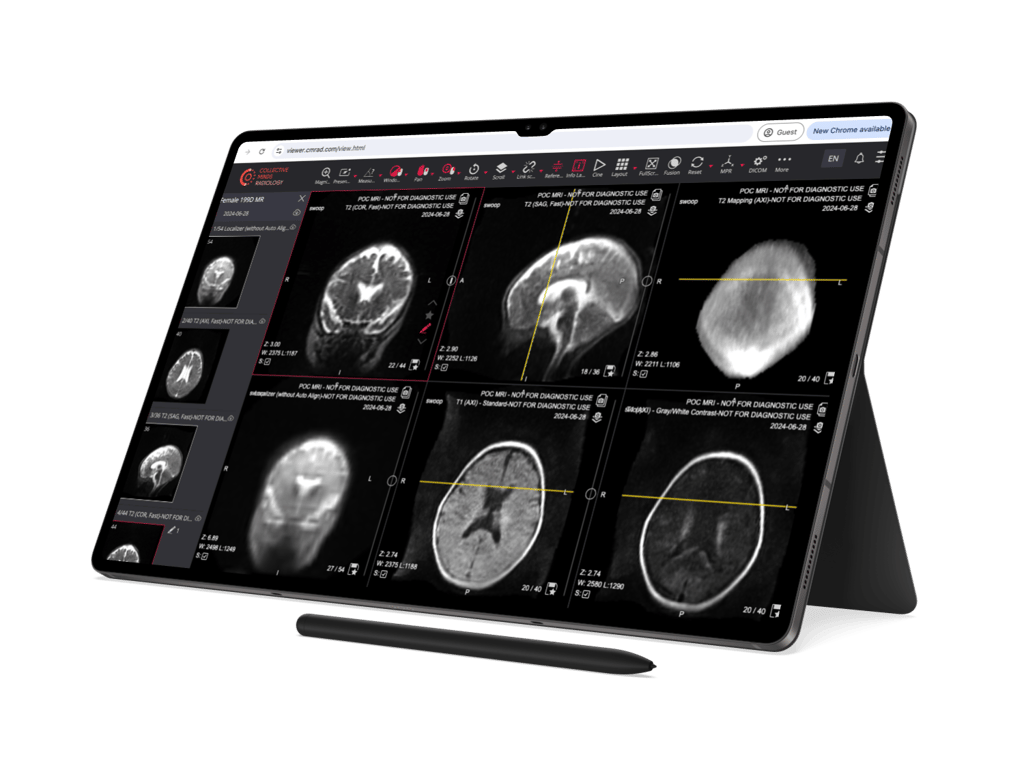
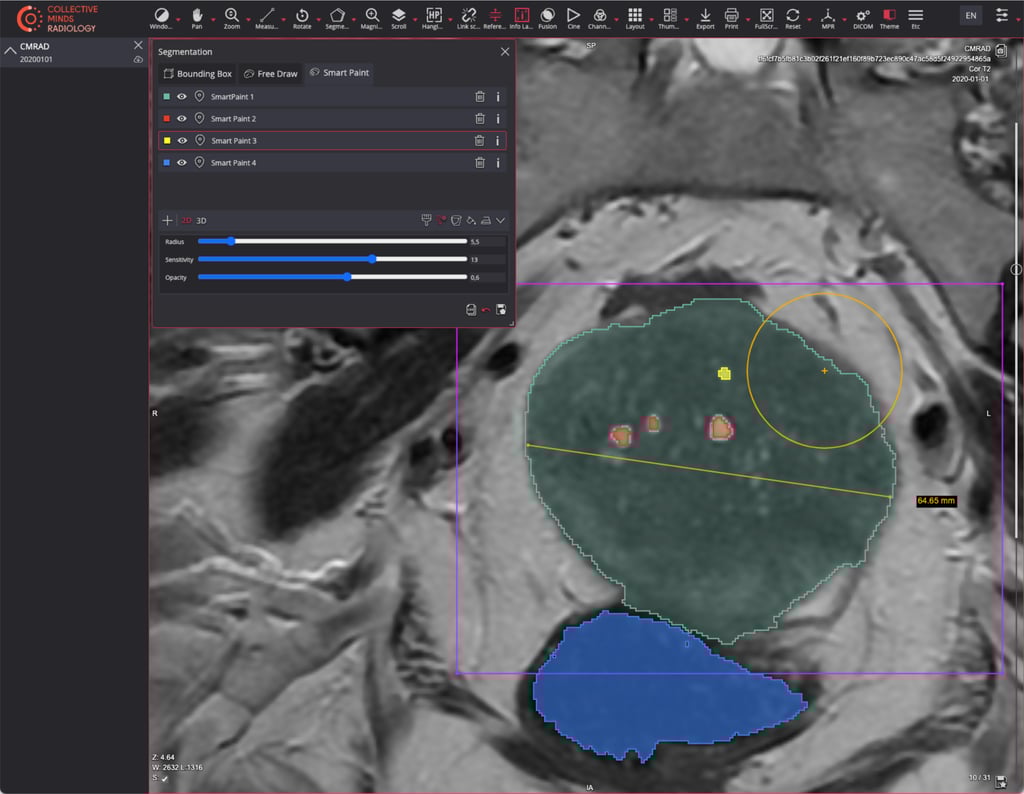
Once imaging data is centralized, review can be standardized too: the same reader assignment rules, the same reading criteria, and the same adjudication process for every study, regardless of originating site. This is what makes blinded independent central review practical at scale across a multi-site trial.
Standardized review workflows also make it easier to bring on additional readers mid-study without disrupting consistency, since a new reader is onboarded into one defined process rather than needing to learn site-specific variations.
Reader agreement metrics are also easier to track meaningfully once review is standardized, since differences in measurements can be attributed to genuine reader variability rather than to inconsistencies in how studies were routed or presented to different readers.
7. Keep imaging metadata, reports, and audit trails connected
Centralizing imaging data should mean the metadata, reader reports, and audit trail all live together and reference the same study, rather than being spread across the imaging system, a separate reporting tool, and an email trail. Disconnected records are what make reconstructing a study's history slow and error-prone.
This connectivity is also what makes it possible to answer a specific patient's imaging history quickly, pulling acquisition details, quality outcomes, and review decisions from one place instead of cross-referencing multiple systems.
It also protects against a subtler risk: reports and metadata drifting apart over time as a study is amended, re-read, or corrected. A connected record updates as one unit, while disconnected systems can end up with a report that no longer matches the metadata it was originally generated from.
8. Connect imaging data with the wider clinical trial data ecosystem
Centralized imaging data still needs to connect to the trial's broader data ecosystem, the EDC, the clinical database, and any biomarker or lab data collected alongside it. Imaging that is perfectly centralized but disconnected from the rest of the trial's data creates its own reconciliation problem at analysis time.
Shared patient and visit identifiers between the imaging platform and the EDC, established early rather than reconciled later, are what make this connection possible without a manual matching exercise for every analysis.
This is often the last piece teams think about, since imaging and clinical data are usually managed by different groups using different systems. Deciding on shared identifiers during data management planning, rather than after both systems are already in production, avoids a retrofit that is disproportionately painful for how straightforward the fix would have been earlier.
What a centralized medical imaging data platform should include
A platform built for this job needs to cover the workflow end to end, not just the storage layer in the middle of it.
| Capability | Why it matters |
|---|---|
| Single secure upload channel | Usable by every site regardless of technical sophistication, so there is one process to monitor and support |
| Automated de-identification and pseudonymization | Applied consistently at intake rather than depending on manual, site-by-site handling |
| Quality control at intake | Catches protocol deviations before a study reaches a reader, while a rescan may still be possible |
| Configurable routing and query management | Keeps disagreements and site queries from sitting in an untracked queue |
| Connected audit trail | Links acquisition, transfer, quality control, and review into one traceable record |
Platforms that only cover storage, without these surrounding workflow controls, still leave most of the actual centralization work to the study team. A shared drive or a generic cloud storage bucket can hold every site's images in one place and still fail to deliver a single one of the consistency benefits centralization is meant to provide.
Centralized imaging data management vs traditional imaging core lab workflows
A traditional imaging core lab centralizes expertise: standardized protocols, trained readers, and quality processes delivered as a service. A centralized imaging data platform centralizes the workflow itself, upload, de-identification, QC, routing, and audit logging, as software that a core lab, CRO, or sponsor's own team can operate. In practice, most modern imaging-heavy trials use both: a platform that handles the data workflow, with human expertise, whether in-house or from a core lab, applied at the review and adjudication stage where judgment is actually needed.
This distinction matters when evaluating vendors. A core lab that outsources its own data workflow to a patchwork of legacy tools is still exposed to the same inconsistency risks described throughout this article, regardless of how experienced its readers are. Asking any prospective core lab or CRO partner what platform underlies their data workflow, not just who their readers are, is a reasonable and increasingly common due diligence question.
Also Read: Medical Imaging Workflow: Optimize Clinical Trial Success

Collective Minds helps clinical trial teams centralize imaging data
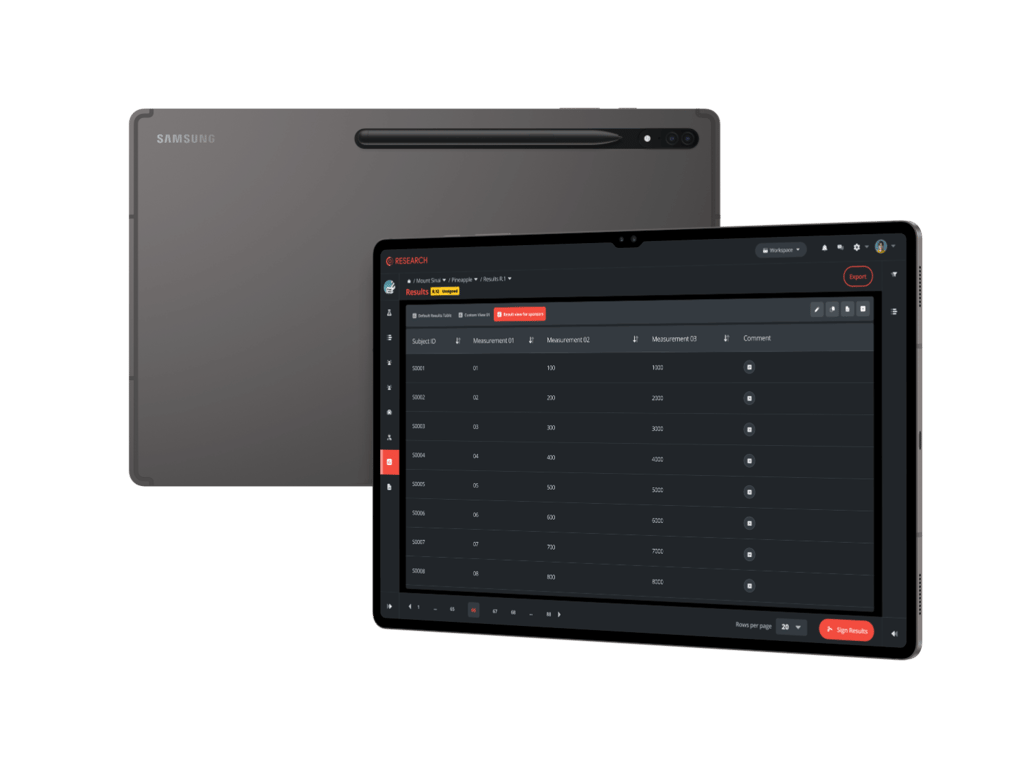
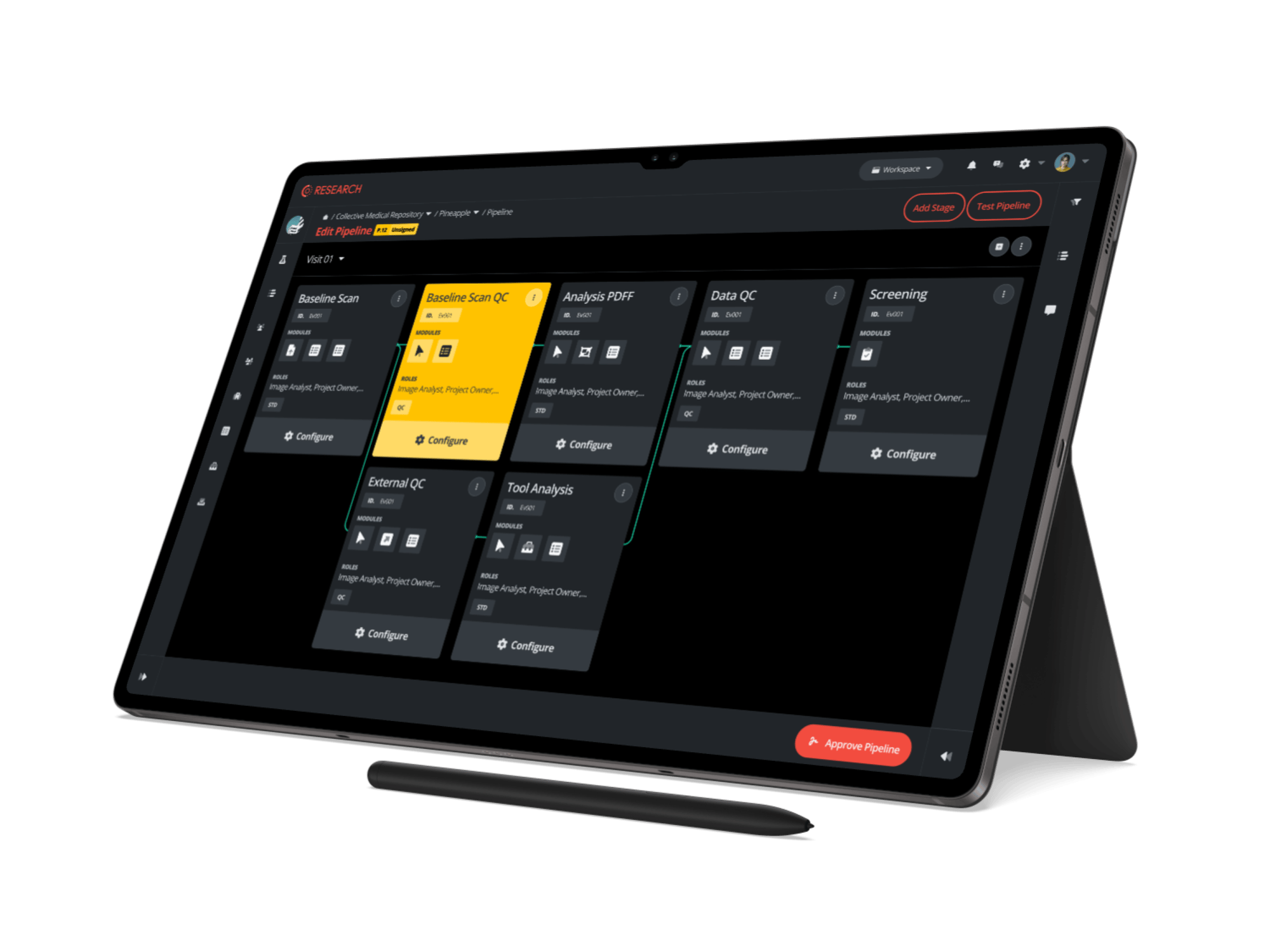
The Collective Minds Research platform is built around the centralization steps described above: one secure upload process per study, automated de-identification and pseudonymization, quality control at intake, configurable query and routing workflows, and a connected audit trail spanning acquisition through final review. Because every site works through the same platform rather than its own local process, the resulting dataset is consistent by design rather than by coincidence.
The same platform also scales with the trial. A study can start with a handful of sites and expand to dozens without changing the underlying workflow, since every new site is onboarded into the same process rather than requiring a bespoke integration, which is usually where ad hoc centralization efforts start to break down.
Also Read: Medical Imaging Data: DICOM, Extraction, and Research-Ready Workflows
Also Read: Clinical Trial Imaging in Medical Research
Build a cleaner imaging data foundation before the trial scales
Centralizing imaging data is far easier to do at study start than to retrofit once a dozen sites have already developed their own habits. Trials that establish one workflow, one upload process, one set of de-identification rules, one quality control gate, from the beginning spend far less time later reconciling inconsistent data across sites. Those that treat centralization as an afterthought usually find out how much reconciliation work that creates right when the trial is trying to scale to more sites, not when it has the most slack to absorb it.
The trials that get this right treat imaging data centralization as part of the initial protocol and data management planning, alongside decisions about EDC configuration and statistical analysis plans, rather than as an operational detail to be worked out once sites are already active. That single decision, made early, is what separates a trial that scales smoothly from one that spends its final months untangling data it should never have had to untangle.
FAQs
Can centralized imaging data management support both retrospective and prospective studies?
Yes, though the workflow differs slightly. Prospective studies can enforce centralized acquisition and intake from the first patient, while retrospective studies typically centralize at the point of extraction, pulling existing imaging data from site PACS systems into the centralized platform for consistent de-identification, quality checks, and structuring before analysis. Consortium and multi-institution research projects often combine both, adding retrospective cohorts to a platform originally built for prospective data collection.
How does centralized imaging data management support regulatory inspection readiness?
Because every study moves through the same workflow, with the same logged steps, a centralized platform can produce a complete acquisition-to-review timeline for any patient's imaging data on demand, rather than requiring a team to reconstruct that timeline from site-level records and emails when an inspection request comes in. That same traceability also makes it easier to demonstrate consistent protocol adherence across every site in the trial, not just the one an inspector happens to select for review.
Do sponsors still need an imaging core lab if they use a centralized imaging platform?
Often yes, but the role shifts. The platform handles the data workflow, upload, de-identification, QC, and routing, while the core lab, in-house or contracted, provides the trained readers and clinical judgment the platform is designed to support rather than replace. Smaller sponsors sometimes use the platform's own reviewer network instead of contracting a separate core lab, but the underlying workflow requirements are the same either way.
Reviewed by: Pilar Flores Gastellu on July 29, 2026