Multi-reader, multi-centric study across countries
Upload a case set once, invite readers wherever they are, and collect every reading on the same form.
Agreement between readers is hard to measure when they sit in different hospitals, time zones and PACS systems. Collective Minds gives every reader the same cases, the same viewer and the same form, so differences in the results come from the readers and not from the setup.
How it works
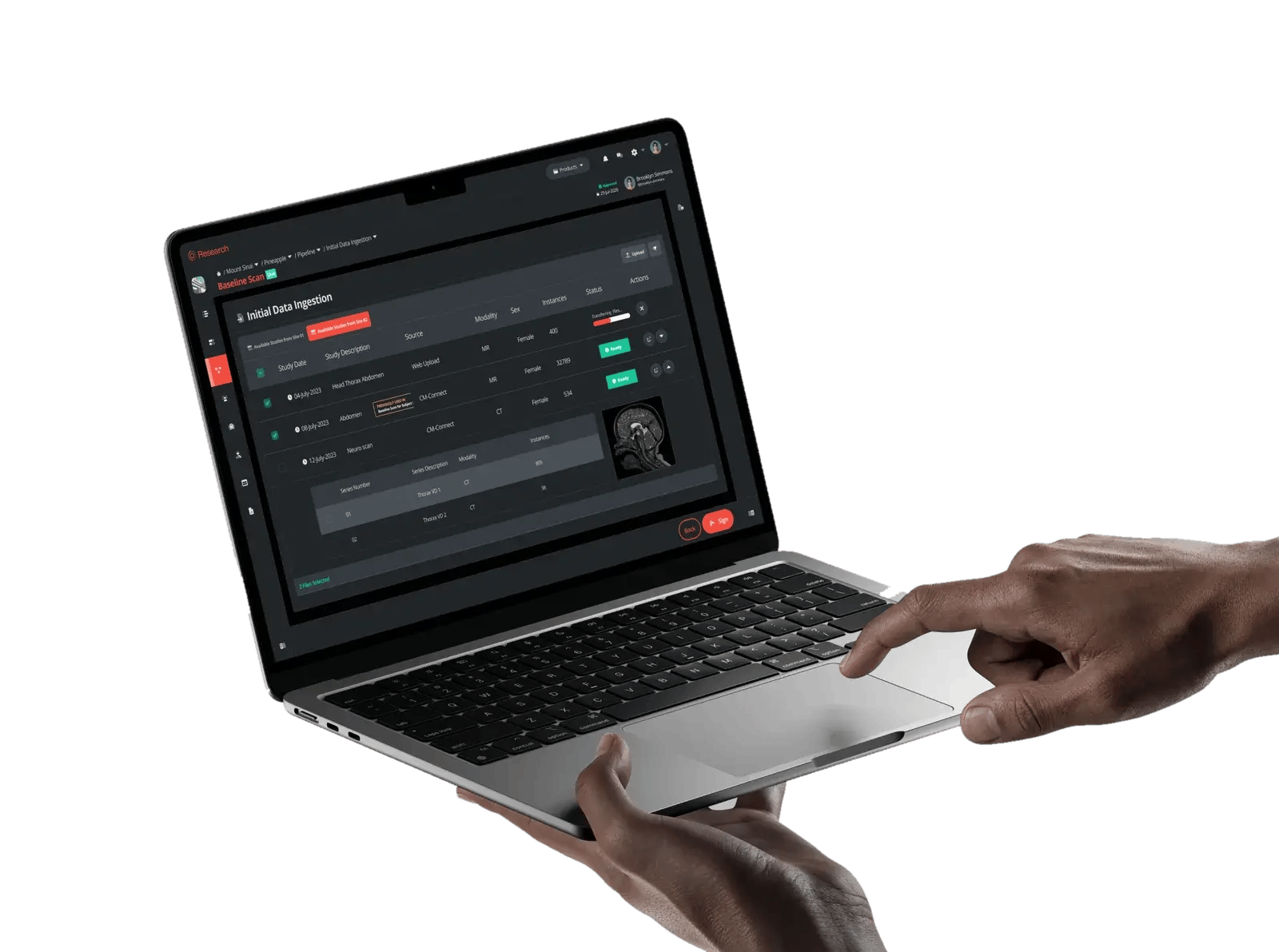
- Upload the case set once. Send the exams; they will be pseudonymised.
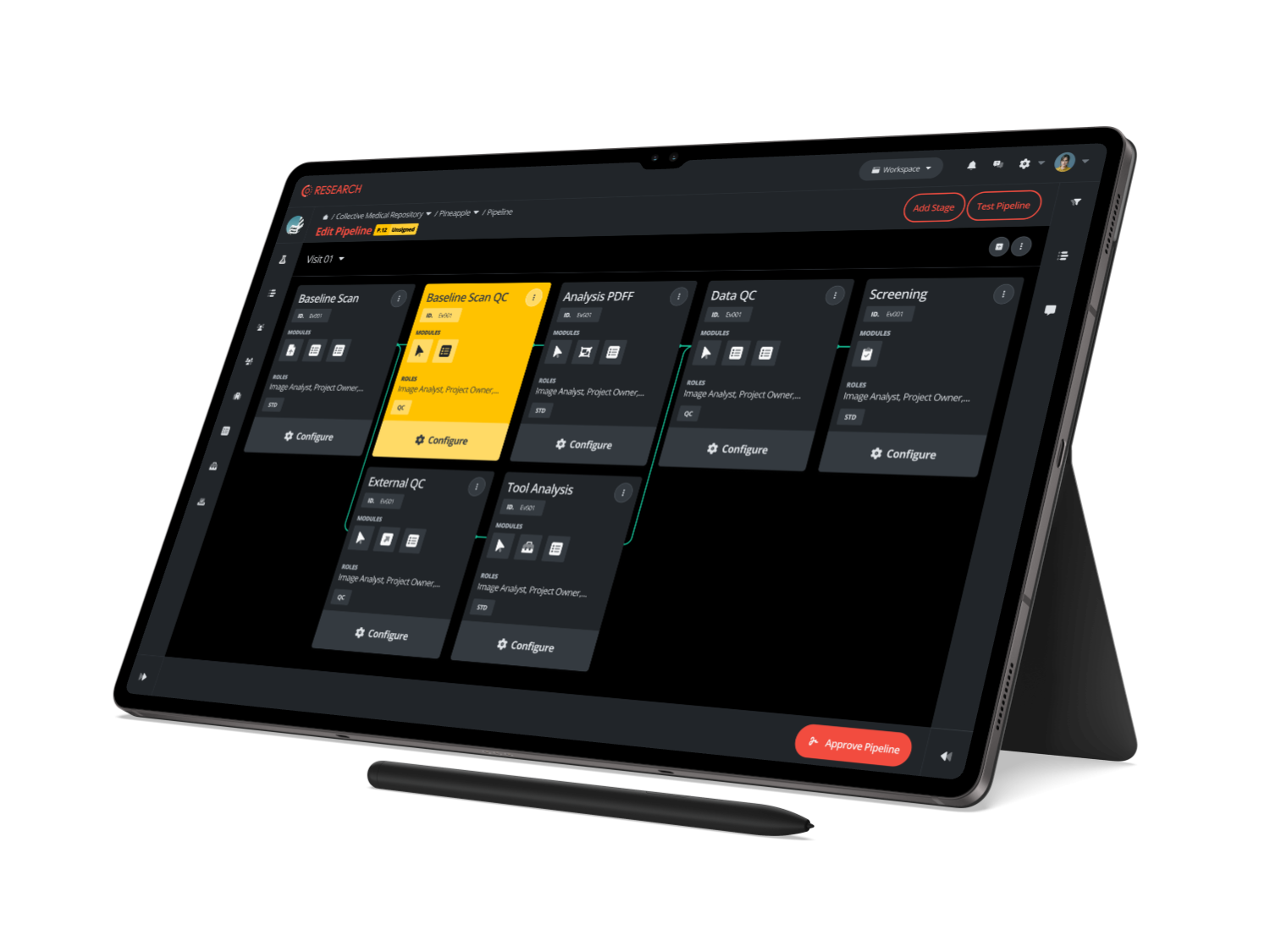
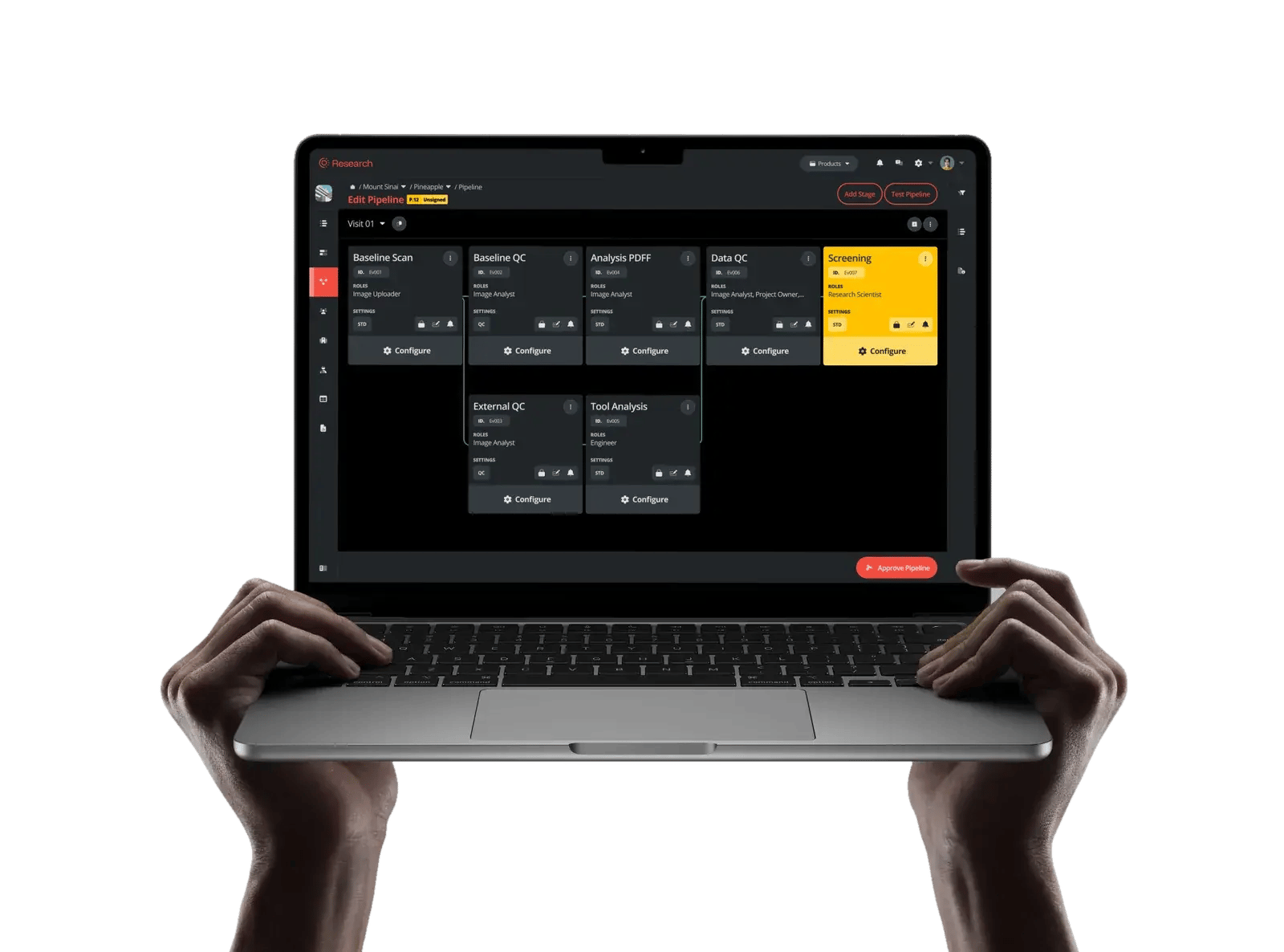
- Design the reading. Set the questions, who reads which cases and how many reads each case gets.
- Invite the readers. Readers sign in from an email invitation, open their task list and read in the browser. Each reader sees only their own tasks.
- Track progress. A dashboard shows task completion for every case and every reader.
- Export the readings. Download the form results as CSV for your statistics.
What changes
- Readers anywhere, one form. Every reader answers the same questions on the same cases.
- Progress at a glance. See which reads are done and which are open.
- Data ready for analysis. Results export as CSV.
Projects like this
Edema patterns on neck MRI
A university hospital needed readers outside its own department.
What we did: 2 100 case reads: 70 cases by 30 readers, 20 of them external, on one form.
Result: 30 days from data preparation to completion.
Image quality on prostate MRI
A university group wanted to test whether readers agree most on very good and very poor image quality.
What we did: 12 readers scored about 350 images, with 3 to 5 questions each.
Result: most reads were completed in under three months, and the study was finished in under six.
Biparametric versus multiparametric prostate MRI
A university hospital compared two protocols.
What we did: 120 patients and 5 radiologists, in two reading phases with an AI series added in the second.
Questions we hear
Can readers from outside our institution or countries take part?
Yes. In one study, 20 of the 30 readers were external. The solution is optimized for multiple centers and multiple countries participating.
What do readers need?
A web browser and an invitation. They log in, open their task list and read.
How many readers can a study have?
There is no study too small or too large for the solution. We have run studies with a handful of readers to more than 500.
How long does a study take?
It depends on the number of cases and on reader availability. One study with 70 cases and 30 readers took 30 days from data preparation to completion.
Planning a reader study?