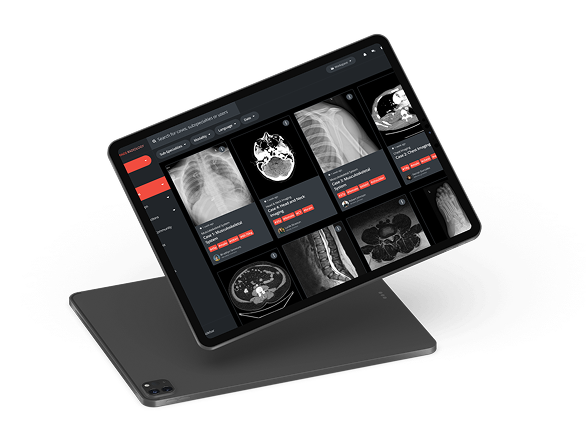
Access is provisioned by your institution's administrator or through the Collective Minds customer success team as part of onboarding. Once your organization is set up, you will receive an invitation email to activate your account.
Getting Started
Every study starts somewhere. Here's what to expect when you first come on board, from setting up your account to getting your team ready to work.
The platform supports three core roles: Admin, Editor, and Viewer. Admins manage users and project settings, Editors contribute to workflows and data entry, and Viewers have read-only access. Permissions are customizable per project.
Most organizations are up and running within days of signing — significantly faster than traditional imaging research setups. The platform is cloud-based and requires no complex installation to get started. If you're deploying CM Connect for direct PACS integration, your IT team will be involved, but our onboarding engineers handle the heavy lifting to keep timelines short.
Yes. Your organization can have multiple users across different roles. Each user has an individual account with their own credentials and audit trail.
Yes. Collective Minds trains super users within your organization, who then support wider internal rollout. Additional resources, including guides and video walkthroughs, are available in the Help Center
You need an active subscription, a designated project admin, and a plan for how imaging data will be transferred — either via CM Connect (PACS push), web upload, or bulk sFTP.
Research
Built for the full complexity of imaging-based research, from clinical trials to reader studies, AI validation, and multicenter collaboration. Here's how the Research workspace brings your data, readers, and workflows into one compliant, connected place.
Research is Collective Minds' GxP-compliant clinical trial imaging platform. It enables multi-center studies by centralizing imaging data management, reader workflows, electronic case report forms (eCRFs), and audit-ready documentation in one place. Learn more about Research
Research supports a broad range of imaging-based studies, including reader studies, clinical audits, AI validation studies, multi-site research consortia, and investigator-initiated trials. It is used today by CROs managing multi-sponsor trials, BioTech and Pharma sponsors running imaging endpoints, MedTech companies supporting device submissions, and academic institutions running investigator-initiated studies. It is optimized for any study requiring centralized imaging endpoints.. See how some of our clients use the platform
There are three methods: direct PACS push via CM Connect, manual web upload through the browser, or bulk transfer via sFTP. The appropriate method depends on your site's infrastructure and volume.
Pipeline is the workflow engine within Research. It allows project admins to define the sequence of tasks in a study, such as eligibility screening, reading, and adjudication, and assign them to specific roles. Each participant sees only their relevant tasks.
Readers receive personalized task lists based on the pipeline configuration. Assignments can be randomized, sequential, or rule-based, and can include blinding controls and conflict-of-interest protections.
Electronic case report forms (eCRFs) are customizable assessment tools that readers complete per case. They capture structured clinical data and are tied to the audit trail, supporting regulatory traceability.
Yes. Results are available in a structured results table with version control and permission-based access. Data can be exported as CSV for use in external statistical software such as Excel or SAS.
Yes. Research adheres to 21 CFR Part 11, GxP/GCP, ALCOA+ principles, and ISPE GAMP guidelines. Every action is logged, signed, and timestamped. The platform is designed to support imaging data in regulatory submissions.
Yes. Research includes a clinical-grade DICOM viewer with segmentation, annotation, measurement tools, MPR views (axial, coronal, sagittal), PET-CT/MR/NM fusion, CINE, window leveling, and 3D rendering.
You need an active subscription, a designated project admin, and a plan for how imaging data will be transferred — either via CM Connect (PACS push), web upload, or bulk sFTP.
Connect
Your imaging data moves securely from scanner to study; no open ports, no exposed infrastructure. Here's how Connect makes it happen.
Connect is a secure local gateway that automates the transfer of DICOM imaging data from your scanners or PACS to the Collective Minds platform.
De-identification and pseudonymization happen locally, before any data leaves your institution. Learn more about Connect
Connect is compatible with major PACS systems and receives DICOM data pushed from your local infrastructure. It requires minimal firewall configuration and does not require inbound ports to be opened.
De-identification and pseudonymization happens on your premises before any data leaves your institution. CM Connect strips identifying DICOM metadata and uses AI-driven pixel masking to detect and remove burned-in patient identifiers — while intelligently preserving diagnostic information. Rules are configurable per channel to match your legal and institutional requirements.
Connect is compatible with Windows Server and Linux LSB-compliant environments.
Connect is built for high-volume environments, supporting over 500 CT studies per day with end-to-end throughput exceeding 120 Mbps.
Updates are applied automatically without manual intervention on your side. There is no need for IT to schedule maintenance windows for Connect upgrades.
Connect provides real-time monitoring with detailed logs and performance metrics. Failed transfers are flagged immediately, and the system supports retry logic to ensure data integrity.
Connect is designed to run on existing infrastructure with minimal resource requirements. Your Collective Minds deployment engineer will advise on the optimal setup during onboarding.
-
4 vCPUs
-
16 GB ram
-
300 GB disk
-
100 Mbps bandwidth towards ingestion.cmrad.com
Teaching
Great radiology education starts with great cases. Here's how Teaching helps institutions build, share, and learn from the images that matter most.
Teaching is Collective Minds' case-based education platform. It enables medical institutions to build, curate, and share imaging case libraries for training, grand rounds, tumor boards, and professional development. Learn more about Teaching.
Teaching is designed for radiologists, clinical educators, residency programs, medical schools, healthcare organizations, and societies that need a structured and compliant way to share educational imaging cases.
Any DICOM-based imaging case can be shared, including CT, MRI, PET-CT, and other modalities. Cases can include annotations, structured notes, and discussion content.
Yes. Organizations can curate proprietary case collections, organize them by topic or modality, and control access per user or group.
Yes. Teaching can be used independently or alongside Research and Connect as part of a broader institutional setup.
Security & Compliance
In clinical imaging, trust isn't optional. Here's how Collective Minds protects your data and meets the standards your organization depends on.
Collective Minds operates an Information Security Management System certified to ISO/IEC 27001:2022 by A-LIGN. Our platform is hosted on AWS, whose infrastructure holds ISO 27001, ISO 27017, ISO 27018 and SOC 1/2/3 attestations. Collective Minds is also compliant with GDPR, HIPAA, NIS2, GxP/GCP, GMP, ISPE GAMP, ALCOA+ and 21 CFR Part 11.
All data is stored on AWS infrastructure in Frankfurt, Germany, with multi-availability zone replication for fault tolerance and data sovereignty within the EU.
Collective Minds acts as a data processor under GDPR. Data processing agreements (DPAs) are available for all customers. Personal data is pseudonymized at the point of collection, and access is strictly controlled by role-based permissions.
Yes. The platform meets HIPAA requirements for the handling of protected health information (PHI). A Business Associate Agreement (BAA) is available upon request.
Research supports electronic signatures and maintains a complete, time-stamped, and tamper-evident audit log of every action taken within a project, meeting the requirements of 21 CFR Part 11 for clinical trial data.
DICOM metadata is pseudonymized and AI-driven pixel masking removes any burned-in patient information from images locally via CM Connect before data is transmitted.
Access is governed by role-based controls configured per project. Only authorized users with the appropriate permissions can view imaging data.
All access is logged.
Retention periods are defined in your agreement and can be configured to meet regulatory or institutional requirements. Data deletion is carried out securely upon request or at the end of the contract.
Pricing & Plans
No hidden complexity. Here's how our pricing works and how to find the plan that fits your team's scope and ambition.
Pricing is subscription-based and tailored to your organization's scope and usage. Plans are available on monthly, quarterly, or annual billing cycles.
Yes. Plans are scoped based on factors such as the number of projects, sites, users, and data volume. Your customer success manager will help identify the right fit.
If usage scales beyond the initial agreement, pricing is adjusted proportionally. Your account team will flag this proactively before any changes take effect.
Collective Minds offers product demos and guided walkthroughs. Contact the team to book your demo.

Pricing is typically structured around your overall use case. Connect is often included as part of a Research subscription, while Teaching can be purchased independently or as part of a bundle. Check teaching pricing on the Teaching page.
For research pricing, contact us.

Project-specific pricing is available for certain engagements. Speak with the sales team to discuss the structure that best fits your workflow.
MedTech
Bringing a medical device to market means proving it works, with imaging data that regulators can trust. Here's how Collective Minds supports that journey.
The Research platform centralizes imaging data collection and reading across all trial sites, enabling device sponsors to maintain oversight, enforce reading protocols, and generate audit-ready imaging endpoints for regulatory submissions such as CE marking and FDA 510(k) or PMA dossiers. Learn how Collective Minds Research can help yor Medtech company
Yes. Third-party AI analysis tools can be integrated into Research workflows, making it well suited for AI validation studies where algorithmic outputs need to be compared against human reader assessments in a controlled, documented environment.
Yes. Automated PACS integration via CM Connect eliminates manual data collection steps, and the centralized platform removes the delays typically associated with multi-site coordination and courier-based image transfer. See some of our client success stories in medtech
Yes. Research is used for both pre-market and post-market imaging studies. Its audit trail, role-based access, and eCRF tools support the structured data collection required for PMCF under MDR.
Biotech
From first-in-human to submission-ready. Here's how Collective Minds helps biotech sponsors manage imaging endpoints across the full trial lifecycle.
The Research platform manages imaging endpoints across multi-center pharmaceutical trials, centralizing data from all sites and providing the GxP-compliant infrastructure needed to support IND, NDA, and BLA submissions.
Can the platform support imaging endpoints for regulatory submissions?
Yes. Research is built to GxP/GCP standards with 21 CFR Part 11 compliance. Imaging data, reader assessments, and eCRF outputs are fully traceable and suitable for inclusion in regulatory dossiers submitted to the FDA, EMA, and other agencies.
Sponsors have access to real-time project dashboards, audit logs, and results tables with role-based visibility. The pipeline tool ensures that all steps in the reading workflow are tracked and documented, supporting sponsor oversight requirements under GCP.
Research pipelines are configurable to support complex study designs. Multiple reader arms, adjudication steps, and interim reads can all be structured within a single project, with access and blinding controls enforced at each stage.
Contract Research Organizations
Running multiple trials, for multiple sponsors, at the same time. Here's how the platform keeps everything organized, separated, and on track.
The platform supports concurrent multi-trial management with strict data separation between projects. CROs can operate under a single organizational account while maintaining complete isolation between sponsor engagements. Learn how Collective Minds Research can help Contract Research Organizations.
Yes. CROs can run multiple active projects in parallel. Each project has its own user permissions, pipeline, and audit trail, with no data crossover between studies.
Access is enforced at the project level through role-based permissions. Users only see the projects they are explicitly granted access to, and all access is logged.
Project managers have access to pipeline overviews, task completion tracking, reader performance monitoring, and results tables. These provide real-time visibility into trial progress without requiring manual status updates from sites. You can see a demo of the tools on the video page under "product features."
Automated DICOM transfer via CM Connect removes manual handling, centralized reading eliminates courier logistics, and the pipeline tool keeps workflows moving with instant notifications at each stage.
Yes. Collective Minds is designed to work alongside existing imaging systems, not displace them. CROs can integrate CM Connect with their current PACS environment to centralize data ingestion and sponsor-facing workflows, while keeping their internal reading infrastructure intact. The platform adds a compliant, sponsor-accessible layer on top of what you already have — without requiring you to rebuild established processes
Yes. CROs often use Collective Minds as the sponsor-facing project layer — handling data centralization, audit trails, eCRFs, and regulatory documentation — while reading workflows run on their existing tools. This gives sponsors the real-time visibility and GxP-compliant record they require, without disrupting the reading environment your team already operates in.
Hospitals & Academia
From investigator-initiated studies to global consortia, academic research moves at its own pace. Here's how Collective Minds fits into that world.
Yes. The Research platform is used by leading academic medical centers and universities for investigator-initiated trials, observational studies, and multicenter research consortia. Learn how Collective Minds Research can help Hospitals and Academia.
Sites connect via CM Connect to push imaging data directly from their local PACS. All data lands in a shared, centralized project space where geographically distributed readers and investigators can collaborate in real time.
Yes. The platform's GxP compliance, audit logging, pseudonymization, and data governance controls are aligned with the requirements commonly set by IRBs and ethics committees.
Images are shared through the platform's controlled access environment. External collaborators are invited as named users with specific role-based permissions, and all sharing activity is logged.
Yes. The Teaching workspace is designed specifically for this purpose. Institutions can build annotated case libraries, organize cases by pathology or modality, and grant access to trainees or students. Learn more about Teaching
Yes. Collective Minds can provide documentation of data governance practices, certifications, and infrastructure specifications to support grant applications and ethics submissions.
Integrations & Technical Setup
The platform works best when it fits into your existing infrastructure. Here's what to expect when connecting your systems, tools, and workflows.
CM Connect is compatible with major PACS systems. Compatibility is confirmed during the technical onboarding process. Contact the team if you need to verify compatibility with a specific system.
Yes. Bulk data transfer via sFTP is one of three supported upload methods alongside CM Connect (PACS push) and manual web upload.
API availability depends on your agreement. Custom integrations and feature requests are handled on a case-by-case basis in collaboration with the Collective Minds engineering team.
Yes. External AI analysis tools can be integrated into Research workflows. Results from these tools can be captured within the platform for documentation and downstream analysis.
Results tables can be exported as CSV files, which are compatible with tools such as Excel, SAS, R, and other statistical packages.
Custom feature development is available. Timeline and cost are agreed upon before work begins. Reach out to your account manager to scope a request.
Support
We're here when you need us. Here's how to get help, stay up to date, and make the most of the platform.
The Collective Minds support team is available Monday to Friday, 9 AM to 5 PM. Swedish time. If you have any questions about our products, you can find answers on our help page. Or contact our Customer Success team
Support is available through the Help Center where you can submit a ticket, browse guides, and access release notes.
Collective Minds releases multiple major updates per year, with ongoing patches and minor improvements delivered continuously. Release notes are published in Software Updates.
Training guides, video walkthroughs, and release notes are available at help.collectiveminds.health Super users at your organization receive direct training during onboarding.
Submit a ticket through the Help Center. Include a description of the issue, the steps to reproduce it, and any relevant screenshots or error messages to help the team resolve it quickly.
Legal
Clear terms, no surprises. Here's what you need to know about data ownership, agreements, and how we handle your information.
Your organization retains full ownership of all data uploaded to Collective Minds. Collective Minds processes data solely to deliver the contracted services and does not claim any rights to your data.
Yes. A DPA is provided to all customers as part of the contractual setup, outlining the roles of data controller and data processor in accordance with GDPR.
Upon termination, your data is returned to you or securely deleted according to the terms agreed in your contract. Collective Minds does not retain data beyond the defined retention period without your explicit instruction.
No. Your data is not shared with third parties outside of the subprocessors required to deliver the service (such as AWS for infrastructure). A list of subprocessors is available upon request.
Collective Minds is a Swedish company and its agreements are governed by Swedish law, with jurisdiction in Swedish courts, unless otherwise
agreed in the specific customer contract.
Yes. For GxP-regulated studies, Collective Minds can provide a Quality Agreement in addition to the standard service agreement, documenting the responsibilities of each party in maintaining GxP compliance throughout the study.
Yes. A BAA is available for organizations operating under HIPAA requirements. It is signed as part of the onboarding process for applicable customers.
See it in action