Musculoskeletal imaging studies, from fractures to knees
Validate fracture-detection AI, run reader studies and manage imaging endpoints in joint trials.
- X-ray
- MRI
- CT
Teams use Collective Minds in musculoskeletal imaging in three ways:
-
to test for example fracture-detection AI against radiologists,
-
to run multi-reader studies on X-ray, MRI and CT,
-
to manage imaging endpoints in joint trials.
The same platform and workflow serve all three.
What teams do in MSK
- Validate fracture-detection AI. Compare the AI alone, radiologists alone and both together on real radiographs.
- Run reader studies on X-ray, MRI and CT. From knee radiographs to a pelvic fracture study on photon-counting CT.
- Manage knee trial endpoints. Eligibility reads on X-ray, and MRI scoring at baseline, 6 and 12 months.
Projects like this
Fracture detection in children with a rare bone disease
A children's hospital and a university tested a commercial AI tool.
What we did: 48 patients, 336 images, 7 readers, read with and without the AI.
Result: per examination, 74.8% for the AI alone, 83.4% for radiologists and 90.7% for radiologists with the AI. Published open access in European Radiology, 2025.
A European reader study for a fracture-detection vendor
An AI vendor needed reader evidence on elbow and knee radiographs.
What we did: 340 X-ray subjects, 15 readers in three geographies, three experts creating the ground truth.
A phase 1b trial in knee osteoarthritis
A pharma sponsor ran the trial together with an imaging core lab.
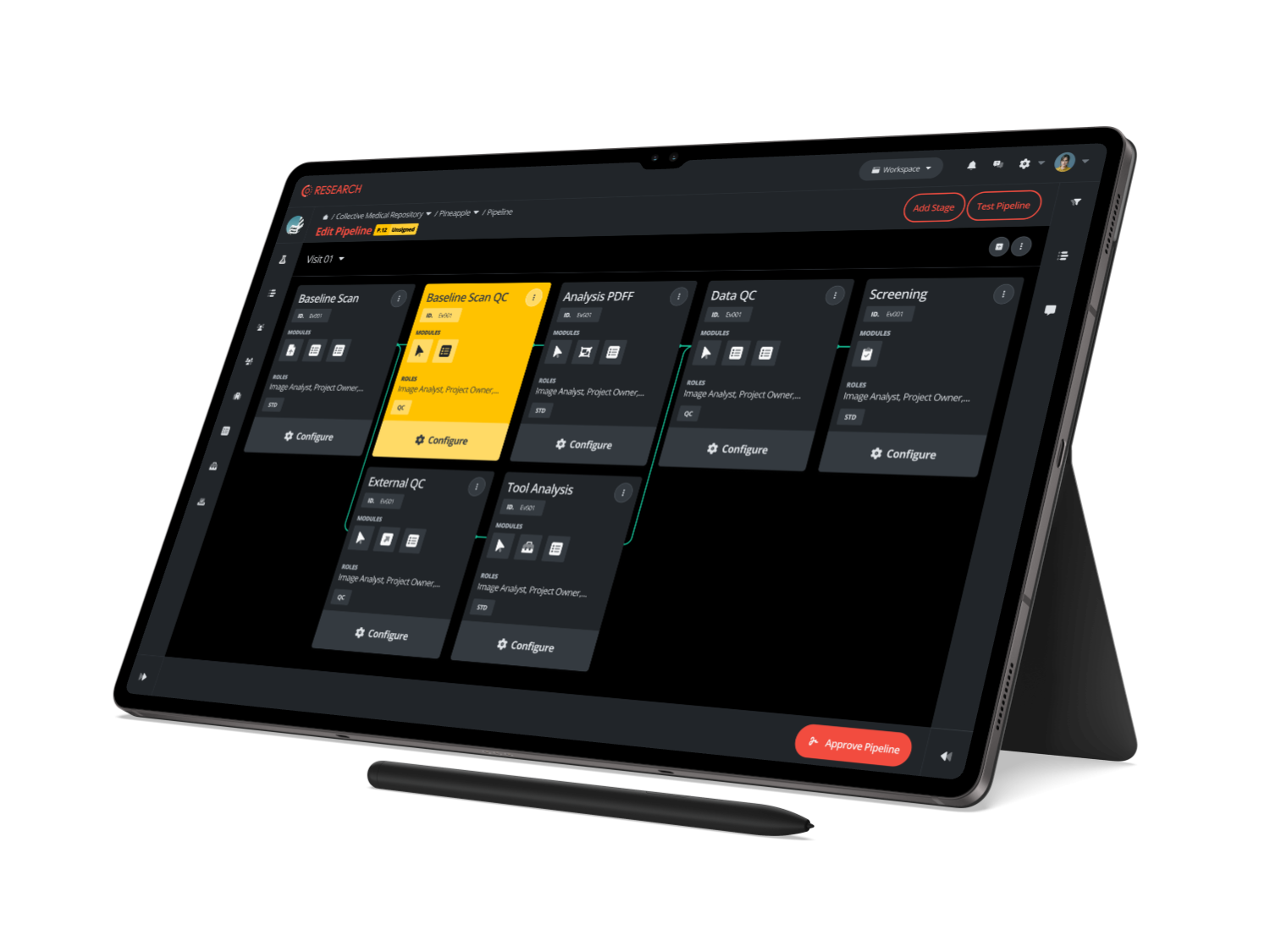
What we did: a study pipeline with forms for the X-ray eligibility read and for MRI synovitis scoring at baseline, 6 and 12 months, for 20 planned patients.
Questions we hear
Which MSK images can we use?
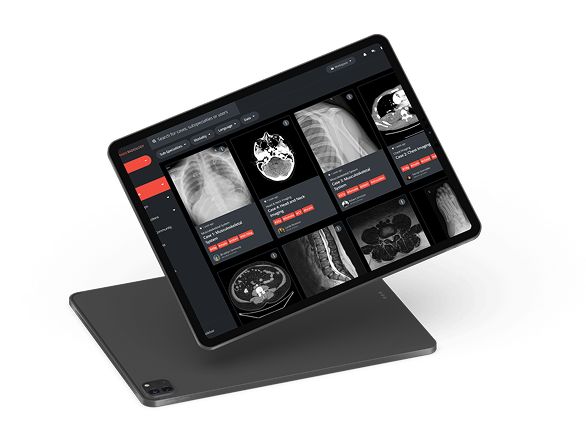
X-ray, MRI and CT. Projects on the platform include radiographs of the hand, wrist, foot, ankle, elbow and knee, knee MRI, and a pelvic fracture study on photon-counting CT.
Can we compare more than one fracture-detection AI?
Yes. One university hospital compared two commercial engines on the same 1,006 radiographs.
Who provides the AI and the readers?
Collective Minds provides the platform and the workflow. The AI engines come from vendors or from your own team, and the readers are agreed for each study.