Mammography and breast imaging, from screening to trials

Run reader studies, validate AI, audit reports and manage data across digital mammography, synthetic 2D and tomosynthesis.

  • Digital mammography
  • Synthetic mammography
  • Digital breast tomosynthesis (DBT)
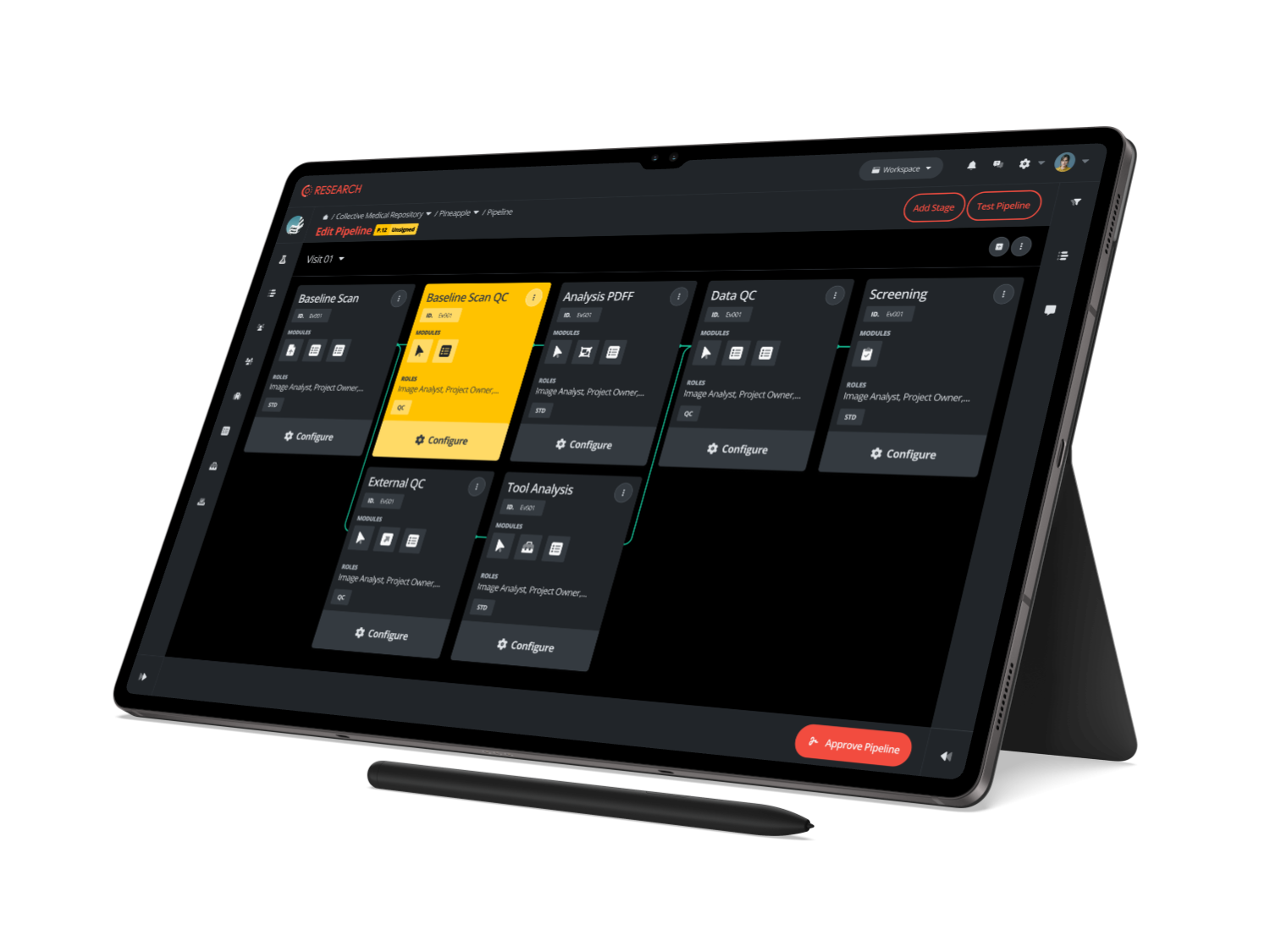
Research-Pipeline-Monitor XDR
Research- Results table

In breast imaging and breast cancer screening, teams use Collective Minds to compare mammography formats, including digital breast tomosynthesis (DBT), in reader studies, test AI engines on screening mammograms from many hospitals, audit mammography reports, and build multicenter breast imaging datasets. Hospitals keep control of their data, and the readers work on one form.

Research-Pipeline-on tablet

What teams do in breast imaging


  • Validate screening AI at scale. Hospitals connect their PACS and stay the data controller. Several commercial engines process the same de-identified mammograms in automated batches, and results are stored per engine so the engines can be compared against the same reference.
  • Run reader studies on tomosynthesis and synthetic mammography. Breast radiologists read the same cases in each format on one form.
  • Audit mammography reports. An external breast radiologist reviews de-identified exams and reports and scores each case, on a recurring schedule.
  • Build multicenter breast imaging datasets. Mammography, breast MRI, ultrasound and pathology from partner centers, harmonized in one repository.
  • Validate any imaging AI. The same workflow works for AI tools in other modalities.

What changes

  • Engines on identical data. No differences in the cases.
  • Hospitals keep control. Each hospital remains the data controller.
  • Room to grow. Add engines and hospitals later.

Projects like this

A national screening AI validation platform

A research group at a medical university needed to test commercial AI engines on screening mammograms from several regions.
What we did: a PACS connection at each of five regions, automated batch processing of four commercial AI engines, central storage of the results and about 4,000 annotated images as reference.
Result: the platform is described in a peer-reviewed paper (Journal of Medical Imaging, 2023).

Synthetic mammography compared with digital mammography and tomosynthesis

A university hospital wanted to compare image types in a diagnostic population, with a stand-alone AI comparison.
What we did: a retrospective reader study in which breast radiologists read the same cases in each format.

A recurring mammography audit for a health region

A health region needed an independent review of its mammography reports.
What we did: an external breast radiologist reviewed 50 de-identified exams, referrals and reports in a clinical-grade DICOM viewer and scored each case on accuracy, clinical relevance and language.
Result: the referral question was answered in 49 of 50 reports, with mean scores of 4.96 for accuracy and 5.0 for clinical relevance and language. The region has repeated the audit since.

A European consortium on invasive lobular breast cancer

A Horizon Europe project needed one multicenter database of mammography, breast MRI, ultrasound, pathology and molecular data on invasive lobular breast cancer.
What we did: Collective Minds leads the data work package: de-identification at each site, harmonized formats and a central repository, with partner centers in four countries. The project started in October 2026.

Breast imaging for clinical trials

Sponsors, CROs and imaging core labs use the same platform for breast cancer trials that they use for central imaging review in other trials. Readers score mammography, synthetic mammography and tomosynthesis on one form, whatever the site.

  • Mammography core lab reads. Central readers assess the same cases in the same format, across all sites.
  • Breast cancer imaging endpoints. Define the read once and apply it to every reader and site.
  • Tomosynthesis in clinical trials. Read tomosynthesis stacks on the same platform as digital and synthetic 2D images.

Questions we hear

Which breast imaging formats can we use?

Digital mammography, synthetic mammography and digital breast tomosynthesis have all been used in reader studies on the platform.

What is external validation of screening AI?

It means testing an AI engine on data it was not built on and comparing its output with a reference standard.

Can several AI engines run side by side?

Yes. A screening validation platform has run several commercial engines on the same mammograms.

Does patient data leave the hospital?

Studies are de-identified before they leave the hospital, and each hospital remains the data controller. Your data protection team should confirm the setup for your project.

Can hospitals or vendors join later?

Yes. The platform is designed so that more hospitals and vendors can be added.

Can we run central reads of mammography and tomosynthesis in a clinical trial?

Yes. Reader studies on all three breast formats have run on the platform, and trials use the same central imaging review workflow. Tell us your read design and we will show how it would run.

Can an imaging CRO or core lab use the platform for breast cancer trials?

Yes. Sponsors, CROs and research groups use the platform for central reads and reader studies. Collective Minds provides the platform and the workflow, and the readers are agreed for each study.

Working in breast imaging?

Tell us about your project and we will show you how it would run.
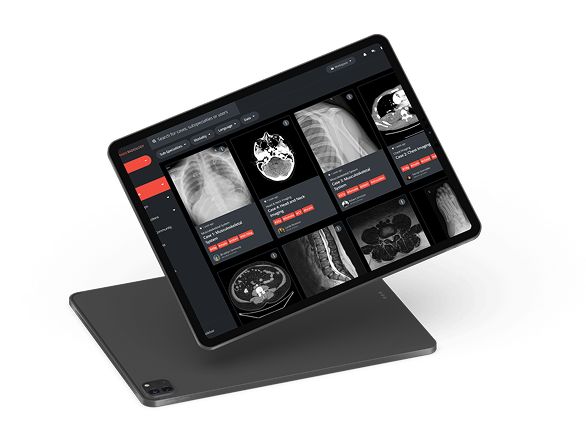
ipad