Radiology education is facing a crisis of relevance and quality in the 21st century. The rapid advances in technology, the increasing complexity of clinical cases, and the growing expectations of patients and society require radiologists to constantly update their knowledge and skills, and to adapt to new challenges and opportunities. However, the traditional methods of teaching and learning, such as lectures, textbooks, and exams, are not adequate to meet these demands. They are often passive, isolated, and standardized, and do not reflect the real-world practice of radiology, which is active, collaborative, and personalized.
To bridge this gap, there is a need for a new pedagogical approach that can foster the development of clinical reasoning, problem-solving, and lifelong learning skills in radiology learners and teachers. One such approach is online case-based learning (CBL), which is a method that uses real or simulated clinical cases as the basis for learning.
Online CBL has been widely adopted in medical education, especially during the COVID-19 pandemic, as it offers several advantages over conventional CBL, such as accessibility, flexibility, and collaboration. However, online CBL also poses some challenges, such as technical issues, distraction, and communication barriers. Moreover, there is a lack of evidence on the effectiveness, perceptions, and learning theories of online CBL in medical education.
To address this gap, Donkin et al conducted a scoping review of the literature on online CBL in medical education, published between 2010 and 2022. They searched various databases and identified 13 articles that met their inclusion criteria. They used the CASP appraisal tool to assess the quality and rigor of each study. They found that most studies were observational and descriptive, and reported positive perceptions and outcomes of online CBL. The benefits to radiology education could be summarized as:
- It enhances the retention and transfer of knowledge, by providing authentic and meaningful contexts for learning, and by activating prior knowledge and linking new information to existing schemas.
- It improves the application and integration of knowledge, by requiring learners to analyze, synthesize, and evaluate information from multiple sources and perspectives, and by facilitating the transfer of knowledge from theory to practice.
- It stimulates the motivation and engagement of learners, by providing them with autonomy, choice, and feedback, and by appealing to their curiosity, interest, and relevance.
- It promotes the collaboration and communication of learners and teachers, by creating opportunities for social interaction, peer feedback, and collective reflection, and by building a sense of community and belonging.
Online CBL also has some advantages over conventional CBL, such as:
- It can provide access to a large and diverse pool of cases, covering various modalities, specialties, and levels of difficulty.
- It can facilitate collaboration and communication among learners and teachers, regardless of their geographical location and time zone.
- It can incorporate novel technologies, such as artificial intelligence (AI), to enhance the learning experience and outcomes.
- It can offer flexibility and convenience for learners and teachers, who can access the cases anytime and anywhere, using any device.
However, online CBL also faces some challenges, such as:
- It requires a reliable and user-friendly platform that can support the delivery, management, and evaluation of online CBL activities.
- It demands a high level of engagement and motivation from learners and teachers, who need to actively participate and contribute to the online CBL community.
- It depends on the quality and relevance of the cases, which need to be carefully selected, curated, and updated to reflect the current standards and practices of radiology.
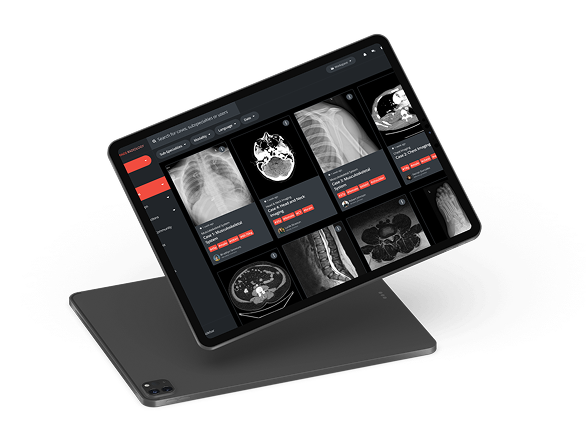
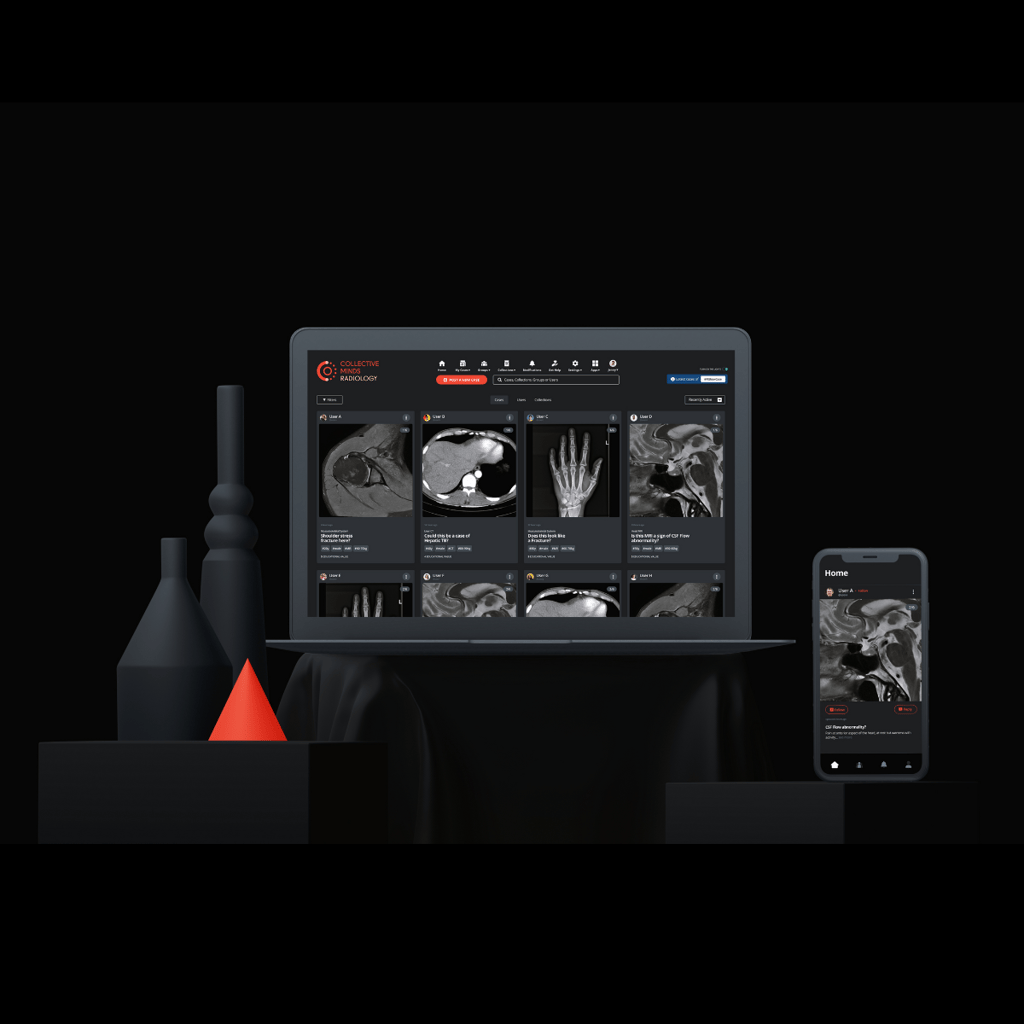
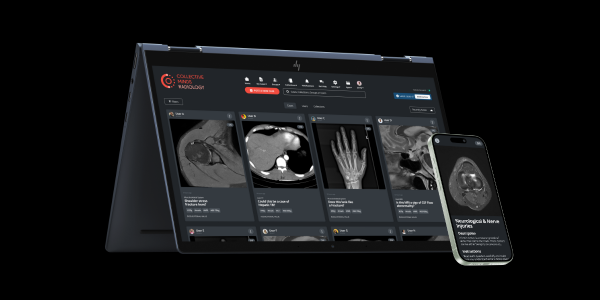
To address these challenges and maximize the potential of online CBL, we introduce Collective Minds Teaching, a cloud-based platform for radiology educators, powered by Collective Minds. Collective Minds Teaching is designed to take your case-based teaching to the next level, by offering the following features and benefits:
- A clinical-grade DICOM viewer that lets you view and work with high-quality images, with tools for multiplanar reformatting, MIP, 3D, PET-CT fusion, and CINE.
- Shared and private case libraries, organized in folders, where you can store cases and build teaching material together with colleagues.
- Structured, reusable seminars, with the option to hide and show diagnoses, run polls, and add PDFs and slides.
- Case discussions, quizzes, and an exam module that enables you to assess learning progress and outcomes.
- Data protection and security, with automatic de-identification and pseudonymization on upload, password-protected seminars, and role-based access control.
- Live, hybrid, and asynchronous delivery, compatible with any video conferencing tool.
Collective Minds Teaching is built for radiology educators who want to run case-based teaching with real, de-identified cases. Institutions use it under an agreement with Collective Minds, and educators invite their learners to access the content.
If you are interested in learning more about Collective Minds Teaching please go ahead and book a demo with us below. We look forward to hearing from you.
Pär Kragsterman, CTO and Co-Founder of Collective Minds


Reviewed by: Pilar Flores on October 16, 2026