
Automating a clinical trial's imaging pipeline sounds simple until a study spans a dozen sites and three countries. Manual uploads, inconsistent de-identification, and one-off quality checks add friction that data teams eventually have to absorb, usually as delays before database lock. Automated medical imaging exists to remove that friction from the parts of the pipeline that do not need a human in the loop, so the people who do need to be there, readers, coordinators, and monitors, can focus on the work that actually requires judgment.
What is automated medical imaging in clinical trials?
Automated medical imaging in clinical trials refers to software that handles the repetitive, rules-based steps of the imaging pipeline without manual intervention: receiving images from sites, checking them against the acquisition protocol, de-identifying them, routing them to the right reviewer, and logging every step for the audit trail. It does not replace the people who make clinical judgments about a scan. It replaces the manual, error-prone work of moving and checking data between those judgment points.
In a manual setup, a site technician exports a study, emails or uploads it to a shared drive, a coordinator checks it against a paper protocol, and someone manually strips identifying information before it reaches a reader. Each handoff is a place where a study can go missing, arrive incomplete, or carry inconsistent de-identification. Automation replaces that chain with a single pipeline that performs the same checks the same way every time, for every site.
Read Also: Streamline Your Clinical Trials With Imaging Endpoints Using Automated Data Collection
Where automation fits in the clinical trial imaging workflow
Before looking at the benefits, it helps to see where automation actually sits in the pipeline, since not every step is a good candidate for it. Judgment calls, like the final clinical read, stay with a trained reviewer. Everything upstream of that decision is where automation does the most good.
| Workflow stage | What gets automated |
|---|---|
| Image acquisition and transfer | Upload from site, DICOM validation, and secure transfer to the central platform |
| De-identification | PHI redaction and pseudonymization applied automatically per the study's pseudonymization profile |
| Quality control | Automated checks against the acquisition protocol before a study reaches a reviewer |
| Task routing | Assignment of studies to the correct reader or workflow step based on protocol rules |
| Analysis support | AI-assisted measurement and pattern detection that supports, rather than replaces, the reviewer |
| Reporting and audit trail | Status dashboards and traceability logs generated automatically as studies move through the pipeline |
How automated imaging improves clinical trial workflows
Each stage above translates into a concrete workflow change once it is automated. Here is what that looks like in practice.
1. Faster image collection from multiple trial sites
Instead of sites emailing images or uploading to a shared drive, automated intake channels pull studies directly from the modality or PACS and validate them on arrival. Missing or incomplete studies are flagged immediately, not weeks later during a monitoring visit, which is usually where manual collection breaks down first.
Also Read: Medical Imaging Workflow: Optimize Clinical Trial Success
2. Automated de-identification and pseudonymization
Removing protected health information from DICOM headers and burned-in pixel data by hand is slow and easy to get wrong, especially across imaging modalities that store identifying information in different fields. Automated pseudonymization applies the same rules consistently to every study, which matters for both patient privacy and for keeping the dataset usable for cross-site comparison. It also makes it possible to apply different pseudonymization profiles per country or per data-sharing agreement without asking a technician to remember which rule applies where.
3. Real-time image quality control before review
Automated QC checks a study against the acquisition protocol the moment it arrives, catching issues like incorrect sequences or missing series before a reader ever opens the case. Studies that fail are queried back to the site right away instead of surfacing as a problem during central review.
4. Standardized imaging data management
Automation enforces a consistent folder structure, naming convention, and metadata schema across every site and every study. That consistency is what makes it possible to compare imaging data across a multi-site, multi-country trial without a manual reconciliation step at the end. It also matters when a trial changes CRO or imaging vendor midway through, since a standardized dataset transfers cleanly while an inconsistent one usually needs weeks of cleanup first.
5. Automated task routing and reviewer workflows
Once a study passes QC, routing rules assign it to the correct reader, second reader, or adjudicator based on the trial's reading paradigm, with notifications and deadlines tracked automatically. This is what keeps a blinded independent central review running on schedule without a coordinator manually managing queues.
Also Read: Imaging Data Management: Essential Strategies and Best Practices
6. AI-assisted image analysis and measurement
AI tools can pre-populate measurements, flag likely findings, or highlight regions of interest for a reader to confirm. Used this way, AI speeds up the reader's work without taking the reading decision away from them, which is the distinction regulators and sponsors care about most.
7. Better reporting, auditability, and trial oversight
Every automated step leaves a timestamped record, so sponsors and monitors can see exactly when a study arrived, passed QC, was assigned, and was read, without requesting a manual status update. That traceability is what an inspection or audit will actually ask for, and it is far harder to reconstruct after the fact from emails and spreadsheets than it is to generate automatically as the study moves through the pipeline.

Benefits of automated medical imaging for clinical trial teams
The workflow changes above add up differently depending on who you ask:
- Sponsors see a shorter gap between last patient scanned and database lock, since imaging data is no longer the bottleneck it used to be
- Site coordinators spend less time chasing missing uploads, re-sending incorrectly formatted files, or fielding queries about study status
- Central readers and core labs get a steadier, better-qualified queue instead of batches of studies that still need basic QC before they can be read
- Regulatory and quality teams get an audit trail that exists by default, rather than one that has to be reconstructed from emails and spreadsheets after the fact
None of these gains require every step to be automated on day one. Most trials phase automation in gradually, starting with intake and QC, since those two steps tend to cause the most delay when handled manually.
What to look for in an automated medical imaging platform
Not all automation is equal. When evaluating a platform, look for:
- Configurable pseudonymization profiles that can be set per channel or per site, not a single fixed rule for the whole study
- Protocol-aware quality control that checks against your specific acquisition protocol, not just generic DICOM validity
- Flexible routing rules that can support blinded review, adjudication, and multiple reading paradigms without custom development
- Open AI integration so you can use commercial imaging AI algorithms, your own models, or a mix of automated and manual steps
- Full audit logging that captures every action on a study without needing to be manually enabled per trial
It is also worth asking how the platform behaves when something goes wrong, such as a corrupted file or a protocol amendment mid-study. A platform that can only handle the happy path will end up creating manual work exactly when a team can least afford it.
How Collective Minds supports automated imaging in clinical trials
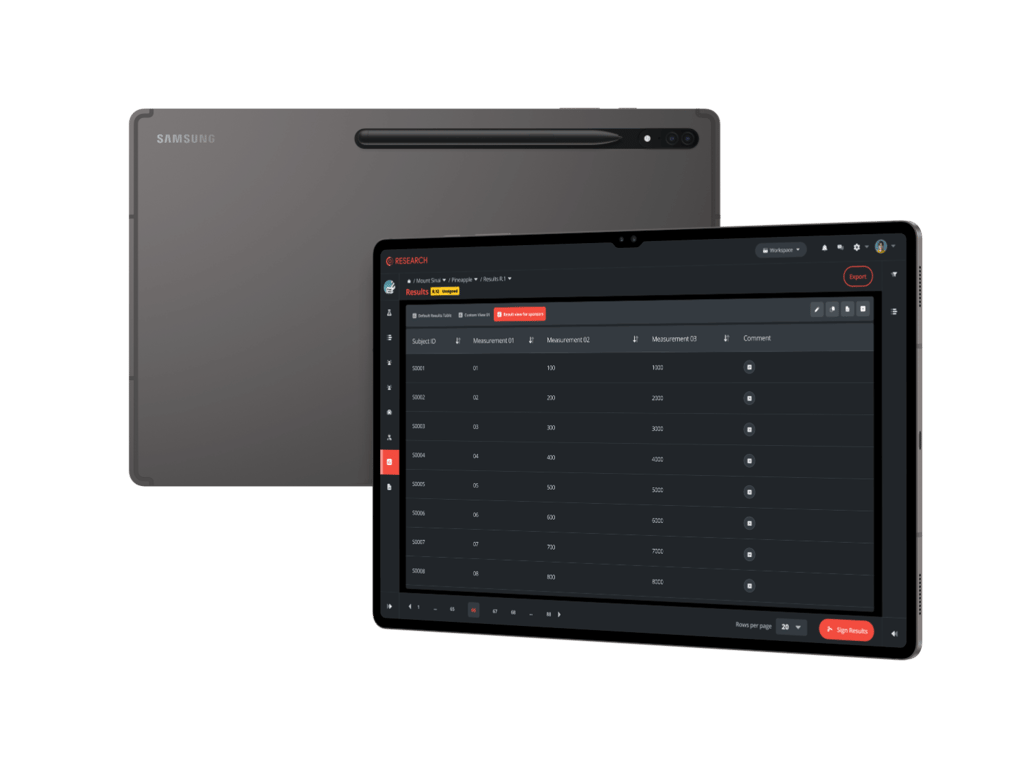
The Collective Minds Research platform is built around the workflow stages described above: automated intake and quality control, configurable pseudonymization, a customizable workflow pipeline builder, and support for plugging in commercial or proprietary AI algorithms alongside manual steps. Teams can automate as much or as little of the pipeline as a given trial requires, and adjust that balance as the study matures.
That flexibility matters because most sponsors do not automate everything at once. A common starting point is intake and quality control, since those two steps are usually where manual workflows lose the most time. Routing, AI-assisted analysis, and reporting can be layered in afterward, once the team has confidence in how the automated data pipeline behaves for their specific trial design.
Introduction to Collective Minds Research for CROs, Pharma and MedTech

The future of automation in clinical trial imaging
Automation in clinical trial imaging is heading toward tighter integration rather than more standalone tools. Three trends stand out:
- Self-service APIs that let sponsors plug in their own validation logic or AI models without waiting on custom development from a vendor
- Earlier quality checks that happen while the patient is still on site, so a rescan can be arranged immediately instead of being discovered weeks later
- Support for decentralized and hybrid trial designs, where imaging may be captured outside a traditional site, without compromising data integrity or regulatory compliance
None of that removes the need for experienced readers and coordinators. It just means less of their time goes to moving files and chasing status updates, and more of it goes to the parts of the job that actually require their judgment.
FAQs about automated medical imaging in clinical trials
Is automated medical imaging the same as AI medical imaging?
No. Automation covers the full pipeline, including intake, de-identification, quality control, and routing, most of which uses rules rather than AI. AI is one tool used within that pipeline, typically for image analysis and measurement support, not the whole system. A trial can automate its entire imaging pipeline without using any AI at all, and many do.
Can automation replace radiologists or imaging experts in clinical trials?
No. Automation and AI-assisted analysis support readers by handling data movement, quality checks, and preliminary measurements, but the clinical read and final interpretation still require a trained reader, and most regulatory frameworks expect that to remain the case. Where AI pre-populates a measurement, the reader still confirms or corrects it before it becomes part of the trial record.
Which clinical trials benefit most from automated imaging?
Trials with multiple sites, countries, or imaging modalities benefit the most, since that is where manual coordination breaks down fastest. Trials with imaging endpoints, blinded independent central review, or high patient volumes also see a bigger return, since the volume of repetitive work is what automation removes. Smaller, single-site studies can still benefit from automated QC and de-identification, but the case for a full automated pipeline is strongest once a trial has to keep multiple sites consistent with each other.
Do you want to learn more about our imaging solutions?
Get in touch here to book a demo with one of our specialists.

Reviewed by: Pilar Flores Gastellu on July 1, 2026