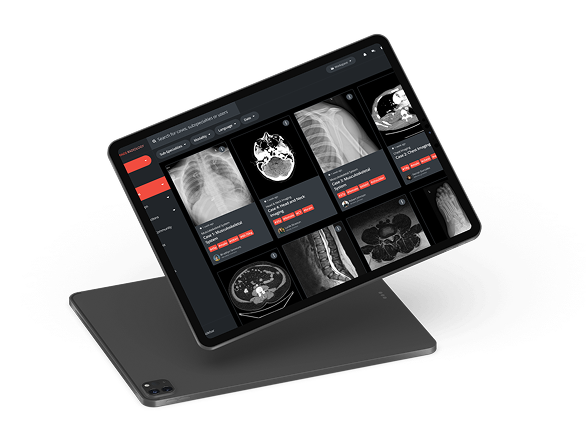

A sponsor's clinical operations lead is three vendor calls into a search for a clinical trial imaging platform, and every pitch sounds the same: fast, compliant, global. The pitch decks do not show what happens six months in, when a scan sits in a queue because it has to move through a suite built for cardiac safety and respiratory endpoints before anyone looks at it. Sponsors, CROs, and research teams end up comparing full-service CROs, specialized imaging CROs, academic core labs, and dedicated imaging platforms, often without a clear framework for what actually matters once the trial is underway. The result is a selection built on vendor reputation and sales conversations rather than a side-by-side look at how each option actually handles data transfer, central review, compliance, and integration with the rest of the trial's systems.
That gap matters more as imaging takes on a bigger role in trial design. Oncology studies lean on RECIST and blinded independent central review. Neurology and cardiology programs increasingly report quantitative imaging biomarkers as primary or secondary endpoints. Regulators expect a clean, traceable path from the scanner to the reported result. When imaging carries that much weight, the platform or vendor behind it shapes how fast the study moves and how much confidence you can place in the outcome.
This guide compares the leading clinical trial imaging platforms, Clario, ICON Medical Imaging, Medidata Rave Imaging, Perceptive, and AG Mednet (Judi), against Collective Minds Research, and walks through how to evaluate them against your trial's actual requirements. It also covers where imaging vendors and CRO services fit into that decision, so you can match the right combination of provider and platform to your study rather than defaulting to whichever vendor already handles your other trial functions.
How clinical trial imaging platforms differ from imaging vendors and CRO services
"Imaging vendor," "imaging CRO," and "imaging platform" get used interchangeably in conversations about clinical trial imaging, but they describe different layers of the same problem. Sponsors evaluating options are usually choosing between four categories of provider, each with a different scope and a different relationship to the images themselves.
- Full-Service CROs. These organizations run the entire trial, from site selection through regulatory submission, with imaging as one specialized service inside a much larger scope. Their strength is breadth and a single point of accountability across every trial function, including multi-center imaging trials that span dozens of sites and several regulatory frameworks.
- Specialized Imaging CROs. These providers focus exclusively on the imaging components of a trial. Their concentrated focus lets them build deep expertise in reader workflows, adjudication, and imaging-specific regulatory requirements that a generalist CRO often has to build from scratch.
- Academic and Industry Core Labs. Imaging core labs combine research expertise with practical trial experience, often around a specific therapeutic area or modality. They tend to sit at the intersection of scientific rigor and applied trial work, which makes them a strong fit for studies where the imaging endpoint requires specialized modality expertise.
- Dedicated imaging platforms. Rather than a service organization, this is the technology layer that gets images from the scanner to the central reviewer and keeps a validated audit trail along the way. A platform like Collective Minds Research can sit underneath a full-service CRO, a specialized imaging CRO, or a core lab, which is why the platform decision and the vendor decision are related but not identical.
Most sponsors researching top imaging vendors for clinical trials need more than one of these. The vendor decision determines who runs the imaging program and reads the scans. The platform decision determines how fast images move, how early quality issues surface, and how defensible the audit trail is when the study is submitted. Getting the second decision wrong is what turns a well-run trial into one with a slow, fragmented imaging workflow, regardless of which vendor is technically in charge.

The leading clinical trial imaging platforms compared
Almost every option below falls into one of two camps. Full-service CROs and integrated eClinical suites offer imaging as part of a much larger scope, so imaging tends to move at the pace of the suite around it. A specialist imaging platform does one thing and builds everything around it: getting images from the scanner to the reviewer, keeping quality high, and letting experts collaborate in real time. The section below offers a top clinical trial imaging platforms compared view of the six most commonly evaluated options.
1. Clario
Clario is the consolidated industry leader for multi-endpoint data collection, formed from years of mergers across the eClinical space. Its strength is breadth: imaging alongside cardiac safety, respiratory, and patient-reported outcomes in one integrated suite. That makes it a strong fit for large, multi-endpoint programs where imaging is one of several data streams to manage under one roof.
The consideration is the one that comes with any broad platform. Imaging is one capability among many, and it follows the pace and the architecture of the wider suite. For a program where imaging is a secondary endpoint, that breadth is an advantage. For a trial where the image is the primary evidence and turnaround time is critical, a platform built solely around imaging speed and reviewer collaboration tends to move faster.
2. ICON Medical Imaging
ICON Medical Imaging is the imaging division of ICON Plc, a full-service CRO with 40,000+ employees following its acquisition of PRA Health Sciences. It runs trials end to end, from site selection to regulatory submission, with imaging as one specialized service inside a very large organization. Sponsors choose ICON for scale and the convenience of bundling every function with a single partner. The consideration is that imaging is one service among many, and its pace reflects that scale.
Bundling everything with one CRO simplifies contracting and gives a single point of accountability, which is a real advantage for many programs. It also means the imaging endpoint is one priority among many service lines. Teams that need imaging to move quickly, or that want deep imaging expertise on demand, sometimes pair a full-service CRO with a specialist imaging platform rather than relying on the bundle alone.
3. Medidata Rave Imaging
Medidata Rave Imaging adds imaging capability to the broader Medidata Rave ecosystem for end-to-end clinical trial management. For organizations already standardized on Medidata across EDC and trial operations, keeping imaging in the same environment is a genuine benefit. The platform is built around comprehensive trial management first, with imaging as an integrated function rather than the core focus.
If your team already lives in Rave, the integration story is real and worth weighing. The question to ask is whether an imaging function inside a trial-management suite gives central readers the speed, the viewing tools, and the real-time collaboration that an imaging-first platform is designed for. When imaging drives the endpoint, the depth of the imaging workflow usually matters more than sharing one environment with the EDC.
4. Perceptive (formerly Invicro and Calyx)
Perceptive is a large full-service CRO formed when Invicro merged with Calyx in 2024. It offers end-to-end drug development services across phases I to IV, including imaging alongside services like supply management and eClinical platforms. Its history includes scale most vendors cannot match, built on a long track record of trials and regulatory approvals. That breadth brings together technology from several acquisitions, with reader capacity tied to internal staff.
Deep therapeutic experience and a long regulatory track record are genuine strengths for complex programs. The considerations are the ones common to large, full-service organizations: integrating technology across several business lines, and reader capacity that follows internal headcount. When a trial needs to scale reads quickly or reach a specific subspecialty, a network model that draws on a large pool of external experts flexes in a way a fixed internal team cannot.
5. AG Mednet (Judi)
Judi, by AG Mednet, is a workflow orchestration platform. It manages the administrative lifecycle of a trial: sites upload files to a submission portal, and the system routes them to the right reviewers and adjudication committees. It works as a traffic controller across therapeutic areas, and it does that job well. Its focus is submission tracking and administrative routing rather than the images themselves.
For trials where the main challenge is administrative, tracking submissions, managing forms, and coordinating adjudication, that orchestration is valuable. The consideration is that it is built around the administrative flow of the trial rather than the images. Sites still upload manually, and review is sequential and form-based. When teams need central readers to see and annotate the actual images in near real time, an imaging platform that streams data straight from the modality adds capability the submission-portal model is not designed for.
6. Collective Minds Research
Collective Minds Research is a specialist imaging platform for clinical trials. It is network-first and cloud-native, built on a single unified codebase, with a pre-connected network of imaging sites and access to a broad pool of imaging experts across multiple countries. Instant Data Access connects scanners directly to the central review platform, so imaging becomes available in minutes instead of days and quality issues are caught while a scan can still be repeated. Sites onboard through a pre-connected network rather than a lengthy technical setup, and reads scale across a global network of experts rather than a fixed internal team. It is built for one job: moving faster to reliable imaging endpoints without cutting a scientific corner.
| Platform | Vendor type | Imaging model | Data access | Reader model | Best fit |
| Clario | Integrated eClinical suite | One endpoint among many | Suite-based collection | Managed in the suite | Multi-endpoint programs |
| ICON Medical Imaging | Full-service CRO | One division of many | Portal and batch | Internal staff, enterprise scale | One partner for the whole trial |
| Medidata Rave Imaging | Trial-management suite | Inside a broader EDC | Suite-based workflows | Managed in the suite | Teams already on Medidata Rave |
| Perceptive (Invicro/Calyx) | Full-service CRO | Within end-to-end services | Upload and review | Finite internal staff | One-stop-shop sponsors |
| AG Mednet (Judi) | Workflow orchestrator | Routing, not the image | Submission portal, manual | Sequential, form-based | Submission and adjudication logistics |
| Collective Minds Research | Specialist imaging network | Imaging is the core | Instant Data Access, scanner to platform | Global network of experts and sites | Imaging-endpoint trials |

Comparing clinical trial imaging platforms: key capabilities to evaluate
Whichever platform you compare, five capabilities separate an imaging workflow that helps the trial from one that slows it down.
Imaging data transfer and site connectivity
The single biggest difference between platforms is how images get from the scanner to the reviewer. Traditional models rely on manual upload to a portal, followed by batch transfer and review days or weeks later. An automated imaging data collection approach connects the modality directly to the platform, so imaging is available in minutes. That speed is not a convenience. It compresses the time to imaging endpoints and shortens the whole review cycle, which is what moves database lock forward.
Central review and reader workflows
Every imaging trial deals with protocol deviations, missing series, and inconsistent acquisition across sites. The question is when you find them. Catch a problem in near real time and the site can repeat the scan while the patient is still available. Catch it in a batch review months later and you are left with a query, a missing timepoint, or a weakened dataset. Full-service CROs read with internal staff, so capacity is tied to headcount and specific subspecialties can be hard to source at short notice. A network model works differently, drawing on a broad pool of imaging experts so reads scale with the trial and the right expertise is available when a protocol calls for it. Real-time, concurrent review also lets central readers view and annotate the same images together, rather than passing files through a sequential queue.
Regulatory compliance and data security
Removing friction cannot mean loosening rigor. Sponsors need to keep control of their imaging data throughout the study, with a clean audit trail from acquisition to reported endpoint. Meeting clinical trial imaging compliance requirements means treating traceability, anonymization, and validated workflows as core features rather than add-ons, so the same speed that shortens the timeline also stands up to regulatory scrutiny during inspection and submission.
Integration with clinical trial systems
Imaging rarely lives on its own. It has to connect with the electronic data capture system, randomization, and the rest of the trial's operational stack. Well-designed imaging clinical trial management systems keep imaging data consistent with the rest of the study record instead of forcing teams to reconcile two separate systems by hand. For sponsors already standardized on a specific EDC, the strength of that integration is often the deciding factor between two platforms that otherwise look similar on paper.
AI-powered imaging analysis and quantitative endpoints
Quantitative imaging biomarkers, tumor volume, lesion tracking, and other measurements derived directly from the image, are playing a growing role in how trials define and report endpoints. Platforms built for this shift support quantitative and AI-assisted analysis as part of the core reading workflow, not as a bolt-on export process. That matters most in oncology and neurology programs where a small measurement error can change how an endpoint is classified. A platform that supports this kind of analysis natively lets central readers apply consistent, reproducible measurements across every site and every timepoint in the trial.
Choosing the right clinical trial imaging platform for your study
The decision usually comes down to the role imaging plays in the study and how the rest of your trial is already staffed.
A full-service CRO is the right fit when imaging is one endpoint among several, alongside cardiac safety, respiratory, or patient-reported outcomes, and no single imaging endpoint decides the result. One vendor, one contract, imaging handled inside the wider program keeps things simple for smaller or lower-complexity studies.
A specialist imaging platform is the better fit when the endpoint depends on central read, quality has to be caught early, and turnaround time affects the timeline. This is where a network model, and Instant Data Access in particular, tends to outperform a bundled suite, especially in multi-center imaging trials where consistency across sites is hard to enforce manually.
Combining a CRO with a specialist imaging platform makes sense for many teams. A full-service CRO or suite handles the broad trial functions, and a dedicated imaging platform like Collective Minds Research handles the imaging endpoint where speed and reviewer quality matter most. This best-of-breed setup lets sponsors keep a single point of accountability for trial operations while giving imaging the dedicated infrastructure it needs when the image is the evidence.

Frequently asked questions about clinical trial imaging platforms
What are the best clinical trial imaging platforms?
The traditional options sponsors and CROs compare are Clario, ICON Medical Imaging, Medidata Rave Imaging, Perceptive, and AG Mednet (Judi), and new modern specialist platforms like Collective Minds Research. The "best" platform depends on whether imaging is a secondary endpoint inside a broader program or the primary evidence the trial's outcome depends on.
How do sponsors choose an imaging vendor for clinical trials?
Sponsors typically weigh technical capabilities, therapeutic expertise, global reach, regulatory compliance, and how well a vendor's systems integrate with the trial's existing EDC and operational stack. A vendor's track record in similar trials, and its ability to scale reader capacity for the specific modality and therapeutic area, are also central to the decision.
What features should a clinical trial imaging platform include?
At minimum, a clinical trial imaging platform should support fast, direct data transfer from the scanner, real-time quality control, a validated and auditable review workflow, secure and compliant data handling, and integration with the trial's EDC and other systems. Platforms built for imaging-driven endpoints increasingly add quantitative and AI-assisted analysis tools directly into the reading workflow.
How does blinded independent central review work in imaging trials?
Blinded independent central review, or BICR, uses reviewers who are independent of the trial site and blinded to treatment assignment and clinical outcome data to assess imaging against a standardized protocol, such as RECIST in oncology studies. Centralizing review this way removes the variability that comes from site-level reads and gives regulators a consistent, defensible basis for the imaging endpoint.
Can a specialist imaging platform work alongside a CRO?
Yes. Many teams run a best-of-breed setup: a large CRO handles the broad trial functions, and a specialist platform like Collective Minds Research handles imaging where speed and reviewer quality matter most. The specialist platform slots into the imaging endpoint without replacing the rest of the program, so sponsors get deep imaging capability without giving up the CRO's operational oversight.
Reviewed by: Pilar Flores Gastellu on August 26 2026