Walk into a clinical trial imaging meeting and the conversation is half acronyms: CRA, CRO, BICR, RECIST, DICOM, PACS, sometimes in the same sentence. For anyone new to trial imaging, or moving between radiology and clinical operations, that shorthand can slow down a conversation more than it speeds it up. This guide collects the radiology, imaging, and clinical trial terminology you will actually run into, organized so you can find a term fast instead of scrolling through an alphabetical list.
The terms below are grouped by where you would actually encounter them: general radiology abbreviations, the shorthand used in orders and reports, modality and technique names, data and systems terminology, response assessment vocabulary, and the broader clinical trial and regulatory acronyms that surround any imaging-heavy study.
Common radiology and medical imaging abbreviations
These are the abbreviations that show up constantly across radiology departments and imaging-heavy trials, independent of any specific modality or study design. If you only learn one group of terms on this page, this is the one that will come up most often in day-to-day conversation.
- CT: Computed Tomography, cross-sectional imaging built from X-ray data
- MRI / MR: Magnetic Resonance Imaging, imaging based on magnetic fields and radio waves rather than radiation
- PET: Positron Emission Tomography, a nuclear medicine technique that images metabolic activity
- SPECT: Single Photon Emission Computed Tomography, a nuclear medicine tomographic technique related to PET
- US / U/S: Ultrasound, imaging based on sound waves
- XR: X-Ray, conventional radiography
- CXR: Chest X-Ray, one of the most frequently ordered imaging studies
- NM: Nuclear Medicine, the department or modality category covering PET and SPECT
- DICOM: Digital Imaging and Communications in Medicine, the standard format medical images are stored and transferred in
- PACS: Picture Archiving and Communication System, the system that stores and distributes DICOM images
- RIS: Radiology Information System, the system that manages radiology scheduling and reporting, distinct from a PACS, which stores the images themselves
- ROI: Region of Interest, a defined area on an image selected for measurement or analysis
- VOI: Volume of Interest, the three-dimensional equivalent of an ROI
- HU: Hounsfield Units, the standardized scale used to measure tissue density on CT
Most of these terms are used the same way in routine clinical radiology and in trial imaging, which is exactly why they are worth knowing cold. When a protocol or a monitor's query references PACS or a DICOM export, there is no time to look the term up mid-conversation.
Also Read: 15 Best Radiology Websites for Medical Professionals
Diagnostic imaging terms used in orders and reports
These shorthand terms show up in imaging orders and radiology reports, and they carry over directly into how sites document imaging in a trial. A monitor reviewing source documents at a site will see these constantly, even if they never appear in the trial's own case report forms.
- Dx: Diagnosis
- r/o: Rule out, used when an order is checking for a specific condition rather than confirming one
- STAT: Immediately, used to flag an urgent order
- NPO: Nothing by mouth, a preparation instruction relevant to certain contrast studies
- W/ contrast: With contrast, meaning a contrast agent is used during the exam
- W/O contrast: Without contrast
- F/U: Follow-up, referring to a subsequent imaging visit
- AP: Anteroposterior, describing the direction the imaging beam travels through the body
- PA: Posteroanterior, the reverse direction from AP, standard for a routine chest X-ray
- Lat: Lateral, a side-on view
- KUB: Kidneys, Ureters, and Bladder, a specific abdominal X-ray view
- MSK: Musculoskeletal, referring to imaging of bones, joints, and soft tissue
These abbreviations rarely appear in a trial protocol itself, but they show up constantly in the site-level documentation and radiology reports that back up a study's imaging data, so recognizing them speeds up source data review considerably.
Imaging modalities and techniques used in clinical trials
Beyond the basic modality names, trials often specify a technique or variant, since the exact protocol affects how comparable images will be across sites.
- CT: Computed Tomography
- CTA: CT Angiography, a CT technique focused on blood vessels
- MRI: Magnetic Resonance Imaging
- DCE-MRI: Dynamic Contrast Enhanced MRI, used to assess tissue perfusion over time
- DWI: Diffusion Weighted Imaging, an MRI technique sensitive to water movement in tissue
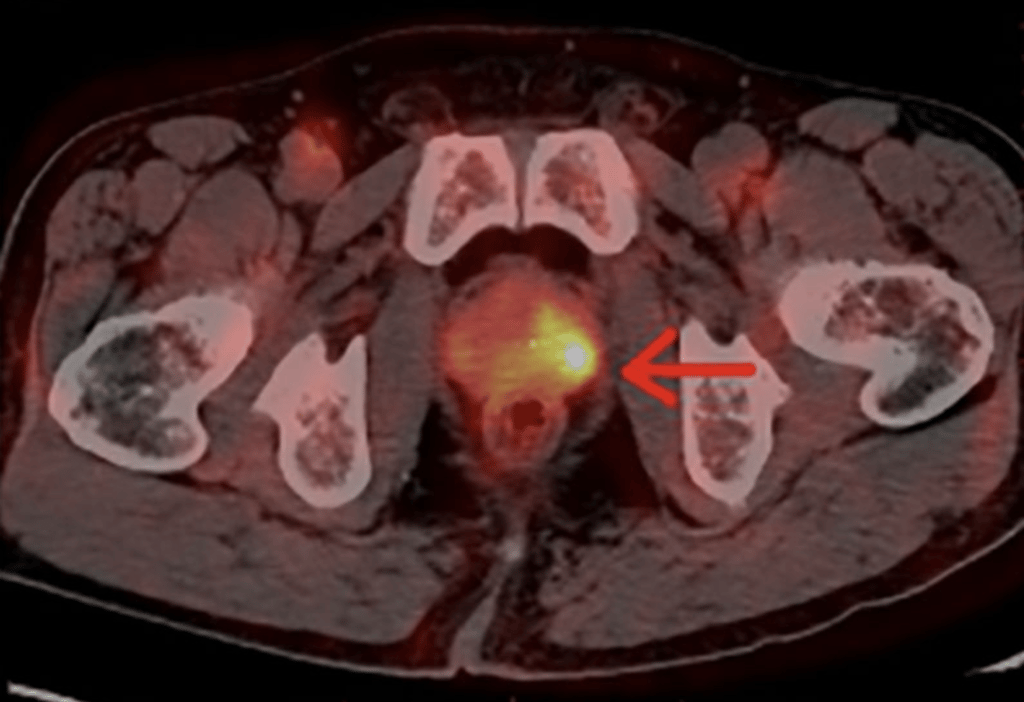
- PET/CT: Combined PET and CT acquired in a single session
- PET/MR: Combined PET and MRI acquired in a single session
- US / Ultrasound: Sound-wave-based imaging, often used for its speed and lack of radiation
- DXA / DEXA: Dual-Energy X-ray Absorptiometry, primarily used for bone density
- Fluoroscopy: Real-time, continuous X-ray imaging
Protocols usually specify not just the modality but the exact technique, since DCE-MRI and a standard MRI, or CT and CTA, are not interchangeable for endpoint purposes. Getting this terminology right in a protocol and imaging manual is what keeps every site acquiring comparable data.
Also Read: Medical Imaging Workflow: Optimize Clinical Trial Success
Imaging systems and data standards
These terms cover how imaging data is stored, exchanged, and validated once it leaves the scanner, which is where clinical trial imaging and standard clinical radiology diverge the most.
- DICOM: Digital Imaging and Communications in Medicine
- PACS: Picture Archiving and Communication System
- RIS: Radiology Information System
- VNA: Vendor Neutral Archive, an enterprise-wide imaging repository not tied to a single PACS vendor, useful when a trial needs to pull images from multiple hospital systems
- EDC: Electronic Data Capture, the system used to collect non-imaging trial data
- eCRF: Electronic Case Report Form, the digital record of a patient's trial data
- CDISC: Clinical Data Interchange Standards Consortium, the organization behind common trial data standards
- SDTM: Study Data Tabulation Model, a CDISC standard for organizing collected trial data
- ADaM: Analysis Data Model, a CDISC standard for datasets used in statistical analysis
- QC: Quality Control, the process of checking data against defined standards before it moves forward
- QA: Quality Assurance, the broader process of ensuring consistent quality across a study
This is where imaging data management stops being a radiology topic and becomes a clinical data management one. An imaging dataset that cannot be mapped cleanly into SDTM or reconciled against the eCRF creates work for both the imaging team and the biostatistics team downstream.
Also Read: Medical Imaging Datasets: A Guide to Healthcare Data Resources
Image review and response assessment terminology
This is where radiology terminology and clinical trial methodology overlap most directly, since these terms describe how a reader records and compares findings over time. Oncology trials use this vocabulary most heavily, but the underlying concepts of a baseline, a follow-up, and a defined response threshold apply across almost any trial that tracks change on imaging.
- ROI: Region of Interest
- VOI: Volume of Interest
- Target lesion: A lesion selected at baseline for ongoing measurement
- Non-target lesion: A lesion tracked for presence or absence, but not measured numerically
- Baseline scan: The reference imaging study a patient's later scans are compared against
- Follow-up scan: Any imaging study performed after baseline to assess change
- BICR: Blinded Independent Central Review, where readers unaware of treatment assignment assess images centrally
- RECIST: Response Evaluation Criteria in Solid Tumors, the standard framework for measuring tumor response
- iRECIST: A RECIST variant adapted for immunotherapy trials, where response patterns can look different
- mRECIST: Modified RECIST, adapted for specific tumor types such as hepatocellular carcinoma
- RANO: Response Assessment in Neuro-Oncology, criteria specific to brain tumor trials
- PERCIST: PET Response Criteria in Solid Tumors, a metabolic response framework
- CR: Complete Response, disappearance of target lesions
- PR: Partial Response, a defined reduction in tumor burden
- SD: Stable Disease, neither enough shrinkage for a response nor enough growth for progression
- PD: Progressive Disease, a defined increase in tumor burden or new lesions
These terms are worth knowing precisely rather than approximately, since a reader charter will define exactly what counts as a target lesion or a confirmed response, and small differences in interpretation between readers are exactly what BICR exists to catch.
Clinical trial and regulatory acronyms used in imaging studies
These are not imaging-specific, but they show up constantly in any conversation about how an imaging-heavy trial is run and overseen.
- CRO: Contract Research Organization
- CRA: Clinical Research Associate
- PI: Principal Investigator
- GCP: Good Clinical Practice, the international quality standard for conducting trials
- ICH: International Council for Harmonisation, the body behind many global trial guidelines
- IRB: Institutional Review Board, the US ethics oversight body for a trial site
- IEC: Independent Ethics Committee, the equivalent of an IRB outside the US
- ICF: Informed Consent Form
- EDC: Electronic Data Capture
- CRF / eCRF: Case Report Form / Electronic Case Report Form
- TMF: Trial Master File, the complete record of documents that show a trial was conducted properly
- AE: Adverse Event, any unfavorable medical occurrence in a patient during a trial
- SAE: Serious Adverse Event, an AE that meets specific criteria for severity
- FDA: Food and Drug Administration, the US regulator for drugs and devices
- EMA: European Medicines Agency, the EU equivalent of the FDA
None of these acronyms are specific to imaging, but an imaging-heavy trial touches almost all of them, from the ICF a patient signs before a scan to the TMF that has to show every imaging query was resolved. Knowing this layer of vocabulary is what lets an imaging specialist and a clinical operations lead have the same conversation.

Make imaging terminology easier to manage across clinical trials
None of these terms are difficult on their own. The challenge is consistency: making sure a site in one country uses the same acronym, the same response criteria, and the same reporting terms as a site in another, so the resulting data can actually be compared. That consistency is exactly what standardized protocols, centralized review, and platforms built for multi-site imaging trials are designed to enforce.
A shared glossary is a reasonable first step for a study team, but it only helps if the underlying workflow enforces the same definitions everywhere, from the reader charter down to how a query gets logged. That is usually the difference between a glossary that gets used and one that gets written once and forgotten.
Read Also: Challenges in Clinical Trials: The Crucial Role of Medical Imaging

Reviewed by: Mathias Engström on July 1, 2026