In clinical trials, choosing the right software can mean the difference between meeting a deadline and missing it. Two prominent names often come up for imaging trials: Judi by AG Mednet and Collective Minds Research. However, these two platforms are not direct clones of each other. They solve the problem of "clinical trial management" from completely different angles.
At a glance
Judi (AG Mednet) is primarily a workflow orchestration tool, designed to manage the administrative lifecycle of a trial—queries, forms, and endpoint adjudication tracking. Collective Minds Research is a real-time imaging platform, built to bypass administrative lag and give central reviewers instant access to the actual medical images.
-
Choose Judi (AG Mednet) if: You need a generalist workflow orchestrator. It is best for managing the process of a trial—tracking where a query sits, managing DSMB forms, and handling adjudication workflows across complex, non-imaging therapeutic areas.
-
Choose Collective Minds Research if: You need imaging velocity. It is the ideal "Judi alternative" for trials where the image is the data. Choose this if you want to skip the "upload-and-wait" cycle and enable central reviewers to see, discuss, and analyze patient scans in real-time, drastically reducing site feedback loops.
Judi (by AG Mednet): The Workflow Orchestrator
Judi, the flagship platform from AG Mednet, is a cloud-based software best known for its ability to "orchestrate" the complex logistical steps of a clinical trial. Growing out of AG Mednet’s history as a secure transport layer for medical data, Judi has evolved into a comprehensive management tool.
Best For: Large CROs or sponsors who need a "traffic controller" to manage the administrative lifecycle of a trial—tracking where a case is, managing Endpoint Adjudication Committee (EAC) workflows, and handling Data Safety Monitoring Board (DSMB) paperwork.
Key Capabilities
-
Process Management: Excel at tracking the status of a submission (e.g., "Pending Review," "Sent to Adjudicator").
-
Broad Therapeutic Support: Because it focuses on workflow rather than deep image analysis, it scales easily across diverse areas like cardiology, oncology, and rare diseases.
-
The "Submission Portal" Model: Judi operates on the traditional model where sites upload data, and the system acts as a secure repository and routing engine to move those files to the right people.
Adoption & Scale
Judi is a heavyweight in the logistics of trials.
-
Volume: Claims to support over 1,000 clinical trials and has processed hundreds of millions of images over its lifetime.
-
Integration: Often acts as the "middleware" that sits between sites and sponsors, focusing on the compliance and routing of data packets.
Note for Researchers: Judi is powerful for managing the timeline and the forms associated with a trial. However, for teams that need to dive deep into the clinical images themselves for real-time scientific discussion, the "routing" model can sometimes feel like an administrative barrier.
Collective Minds Research: The Live Imaging Network
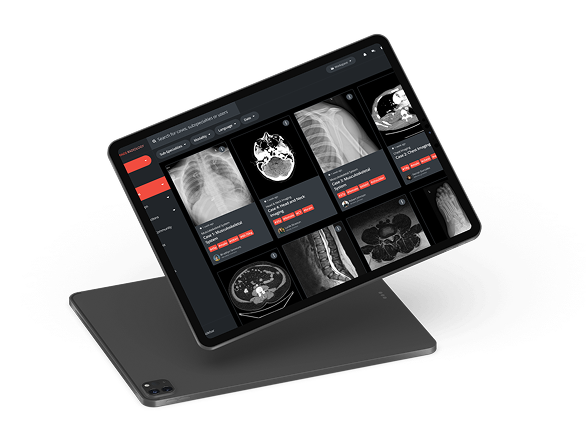
While Judi focuses on the "logistics" of moving files from point A to point B, Collective Minds Research focuses on the "science" of what happens when the data arrives. We are not just a routing engine; we are a live, cloud-native imaging network.
Best For: Trials where the medical image is the primary source of truth. If your study requires deep scientific review, rapid site feedback, or complex multi-modality analysis, our platform replaces administrative friction with clinical velocity.
You might also like to read:ICON Plc Alternative: Collective Minds Research vs. ICON Plc in Medical Imaging Clinical Trials
Escaping the "Portal Trap" with Instant Data Access
In the traditional model (like Judi), a site must manually export, anonymize, and upload data to a portal. If there is an error, the query process can take days.
Collective Minds uses Instant Data Access technology. By integrating directly with the site's modality workflow, data flows from the scanner to the central review platform in near real-time.
-
Zero-Upload Workflow: Reduce the burden on site coordinators by automating the transfer.
-
Immediate QC: Central reviewers can see the images moments after acquisition, allowing for real-time Quality Control (QC) while the patient may still be in the clinic.
True Collaboration, Not Just "Routing"
Judi "routes" a case to a reviewer. Collective Minds allows you to "collaborate" on it.
-
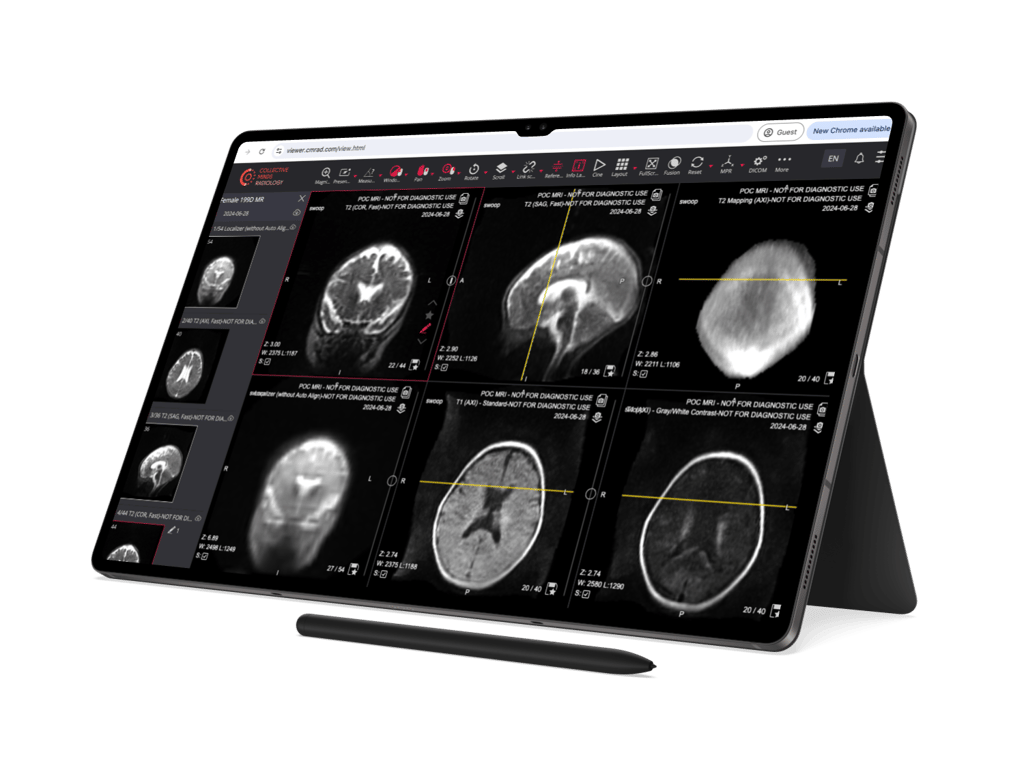
Concurrent Viewing: Multiple experts (e.g., a radiologist in London and an oncologist in New York) can view the same image volume simultaneously in the cloud.
-
Annotation: Discuss findings right on the pixel level. This is critical for complex adjudication where "sending a form back and forth" slows down consensus.
The Pre-Connected Site Network
Judi requires a setup phase to deploy the workflow. Collective Minds offers a "warm start."
-
Global Reach: We have a pre-existing network of over 300 connected sites and 35,000 healthcare professionals.
-
Faster Initiation: Because the legal and technical "pipes" are already laid for many institutions, you can activate sites and start collecting data significantly faster than with traditional vendor setups.
"The clear design of the solution had a very motivating and encouraging effect on the reader."
— Dr. Anselm Schulz, Head of Research Group for Abdominal Radiology, Oslo University Hospital.
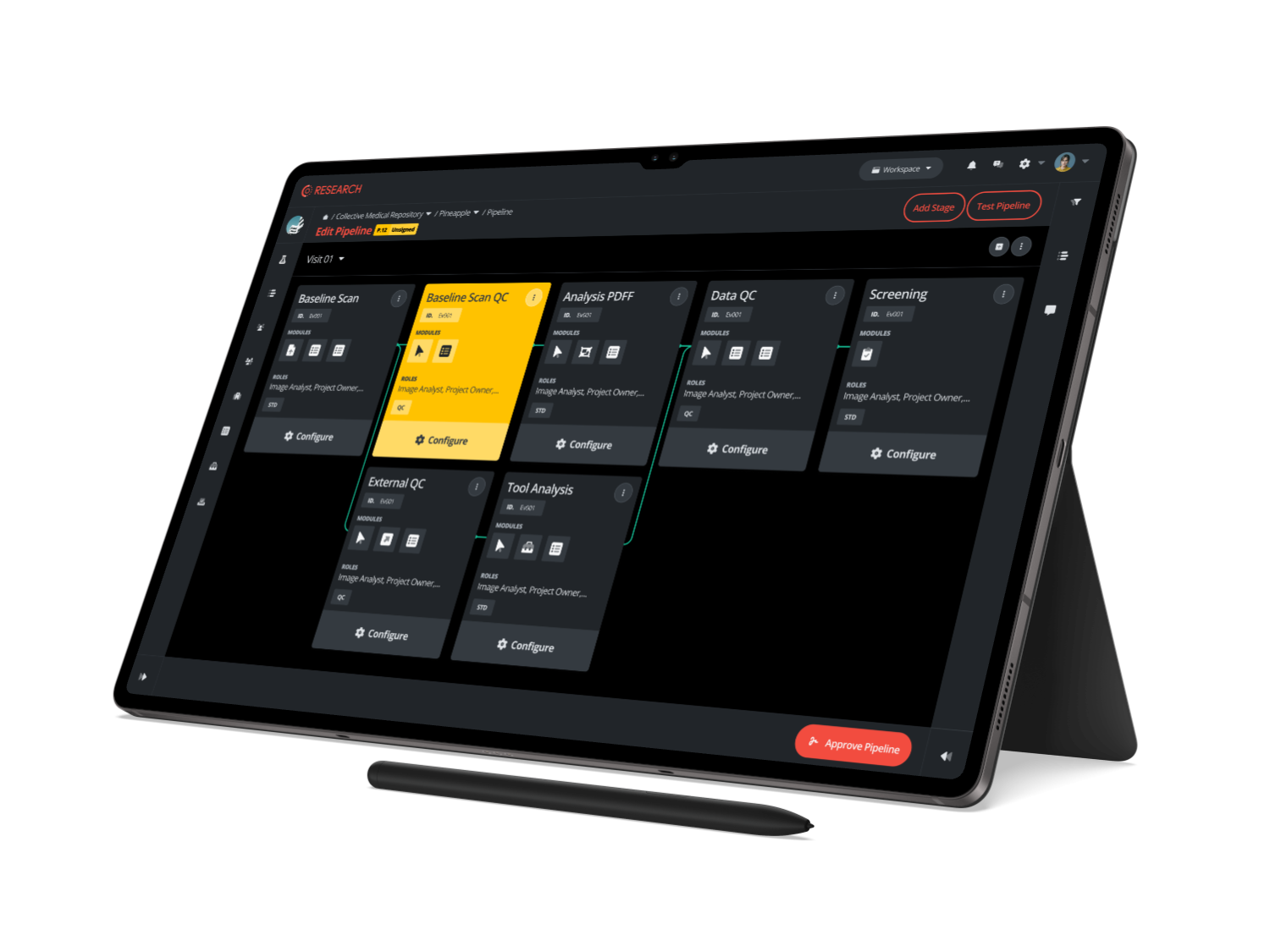
Choosing Between Judi for Imaging and Collective Minds Research
Ultimately, the decision between Judi and Collective Minds Research depends on where the biggest bottleneck lies in your clinical trial.

Administrative Workflow vs. Clinical Insight
-
Judi (AG Mednet) is designed for the clinical trial manager. If your primary challenge is tracking the status of thousands of forms, managing DSMB committees, and orchestrating complex workflows across 20+ therapeutic areas, Judi is the "operating system" for that administrative burden.
-
Collective Minds is designed for the researcher and radiologist. If your primary challenge is getting high-quality data from the site to the reader quickly, our platform removes the administrative layers to prioritize the science.
The "Upload" vs. The "Stream"
-
Judi relies on the site uploading files to a portal. This creates a disconnect between acquisition and review, often leading to "blind spots" where data sits waiting for a manual action.
-
Collective Minds changes the paradigm with Instant Data Access. By connecting upstream at the modality level, we create a continuous stream of evidence. This is the difference between sending a letter and making a video call.
Generalist vs. Specialist
-
Judi is a generalist tool. It handles imaging well, but it also handles safety forms, endpoint adjudication, and supply logic.
-
Collective Minds is a specialist imaging network. Every feature—from our DICOM viewer to our anonymization tools—is built specifically for the nuances of medical imaging.
Introduction to Collective Minds Research for CROs and Pharma.
Things You Might Be Wondering
Can Collective Minds replace Judi entirely?
It depends on the scope. If you are using Judi primarily for its imaging module and query management, yes—Collective Minds is a faster, more modern alternative. If you are using Judi for non-imaging workflows (like complex DSMB management or drug supply logistics), a specialized imaging platform like ours might sit alongside a generalist tool.
How does the site experience differ?
With Judi (and most traditional portals), site staff must manually export data, anonymize it offline, and upload it via a web browser. With Collective Minds Connect, the site simply sends the exam from their PACS or modality to a pre-configured node. The system handles the anonymization and transfer automatically, saving the site coordinator hours of work per week.
Is the Collective Minds viewer FDA/CE cleared?
Yes. Collective Minds provides a regulatory-cleared environment for diagnostic review. Unlike basic "preview" tools found in some workflow software, our viewer is a full-fidelity diagnostic tool capable of handling complex multi-modal reads.
Which platform is faster to deploy?
Because Collective Minds operates on a single, cloud-native codebase with a network of pre-connected sites, we can often deploy a study workspace in days. Traditional workflow orchestrators typically require longer configuration phases to map out custom routing logic for every trial.
Do you want to learn more about our imaging solutions?
Get in touch here to book a demo with one of our specialists.

Reviewed by: Pilar Flores Gastellu on February 10, 2026